Burnout: Understanding the Signs, Symptoms, and Solutions
🕒 Last Updated on February 26, 2025
Burnout: Understanding the Signs, Symptoms, and Solutions
Feeling tired all the time? Struggling to get through the day? You might be experiencing burnout, a state of emotional, mental, and physical exhaustion caused by prolonged stress.
Recognizing the signs of burnout early can help you take steps to recover and prevent serious impacts on your health and well-being.
Burnout doesn’t happen overnight. It creeps up slowly as your energy drains away.
Common symptoms include constant fatigue, feeling detached from your work or relationships, and a sense that nothing you do matters. You might also experience physical problems like headaches, digestive issues, or trouble sleeping.
While burnout is often connected to job stress, it can affect any area of your life where you face ongoing pressure without adequate rest or support.
The good news is that burnout isn’t permanent. With the right strategies and support, you can recover your energy and enthusiasm. Understanding this condition is your first step toward healing.


Save what you love, hover or tap the image and pin it now.
Understanding Burnout
Burnout develops gradually through prolonged stress and manifests in both emotional and physical symptoms that can significantly impact your daily functioning. It often goes unrecognized until reaching advanced stages.
Definition and Manifestations
Burnout is a state of emotional and mental exhaustion caused by prolonged stress, typically related to work but also affecting personal relationships. Unlike simple fatigue, burnout doesn’t resolve with normal rest periods.
Get your Freebie


The condition involves three key dimensions:
- Emotional exhaustion: Feeling depleted and unable to give of yourself emotionally
- Depersonalization: Developing cynical attitudes toward others or your work
- Reduced personal accomplishment: Feeling ineffective and unproductive
Burnout doesn’t happen overnight. It develops through stages that begin subtly with excessive ambition and working harder. It then progresses to neglecting personal needs, displacement of conflicts, and eventually leading to emptiness and physical symptoms.
Burnout vs. Depression
While burnout and depression share symptoms like fatigue and decreased motivation, they differ in important ways.
Burnout is specifically context-related, usually tied to work or caregiving roles, while depression affects all areas of life.
Burnout symptoms may improve when you change environments or take time off, while depression typically persists regardless of circumstances.
Key differences include:

- Burnout: Primarily exhaustion, cynicism, workplace-focused
- Depression: Persistent sadness, loss of interest in all activities, feelings of worthlessness
However, untreated burnout can potentially develop into depression. The conditions can also co-exist, making it important to consult healthcare providers for proper diagnosis.
Symptoms and Signs of Burnout
Physical and mental symptoms of burnout manifest across various aspects of your wellbeing. Recognizing these early can help prevent progression to more severe stages.
Physical symptoms:
- Chronic fatigue and sleep disturbances
- Frequent headaches or muscle pain
- Weakened immune system with frequent illnesses
- Changes in appetite or sleep habits
Mental and emotional symptoms:
- Sense of failure and self-doubt
- Feeling helpless, trapped, and defeated
- Detachment and feeling alone
- Loss of motivation and decreased satisfaction
- Increasingly cynical outlook
- Cognitive problems like difficulty concentrating
You might notice behavioral changes too, such as withdrawing from responsibilities, isolating from others, procrastinating, using food or substances to cope, or taking frustrations out on others.

Save what you love, hover or tap the image and pin it now.
The Causes and Contributors
Burnout doesn’t happen overnight but develops gradually from various sources. Understanding what triggers burnout is the first step toward preventing it.
Work-Related Factors
Excessive workload is one of the primary causes of burnout. When you consistently have more tasks than you can reasonably handle, stress accumulates and recovery becomes difficult.
Working long hours with little rest between shifts or projects can lead to physical and mental exhaustion. This is particularly common in helping professions like healthcare.
Having little control over your work situation worsens burnout risk. When you can’t influence decisions that affect your job responsibilities, frustration builds quickly.
Lack of recognition for your efforts and achievements can make work feel meaningless. When hard work goes unnoticed, motivation naturally declines.
Personality and Personal Life
Perfectionism often sets you up for burnout. When you hold yourself to impossibly high standards, you’re never satisfied with your performance, creating constant stress.
People with neurotic tendencies may react more intensely to workplace stressors. If you tend toward anxiety or negative thinking, you might be more vulnerable to burnout.
Poor work-life balance makes recovery from job stress nearly impossible. Without time to recharge through hobbies, relationships, and rest, work demands become overwhelming.
Financial pressures or family responsibilities can compound workplace stress. When personal life is equally demanding, there’s no refuge from constant pressure.
Insufficient social support both at work and at home leaves you without crucial emotional resources. Having people to talk to about challenges provides essential perspective.
Physical and Emotional Effects
Chronic job stress triggers a cascade of physical responses in your body. Persistent high cortisol levels can disrupt sleep, digestion, and immune function.
You might notice weight changes, body pain, and exhaustion as burnout progresses. These physical symptoms often appear before you recognize the emotional aspects of burnout.
Sleep disturbances create a dangerous cycle. When stress prevents quality sleep, your resilience to workplace challenges diminishes further.
Emotional detachment serves as a protective mechanism when work becomes overwhelming. You might notice yourself caring less about outcomes that once mattered deeply.
Save what you love, hover or tap the image and pin it now.
Impacts of Burnout
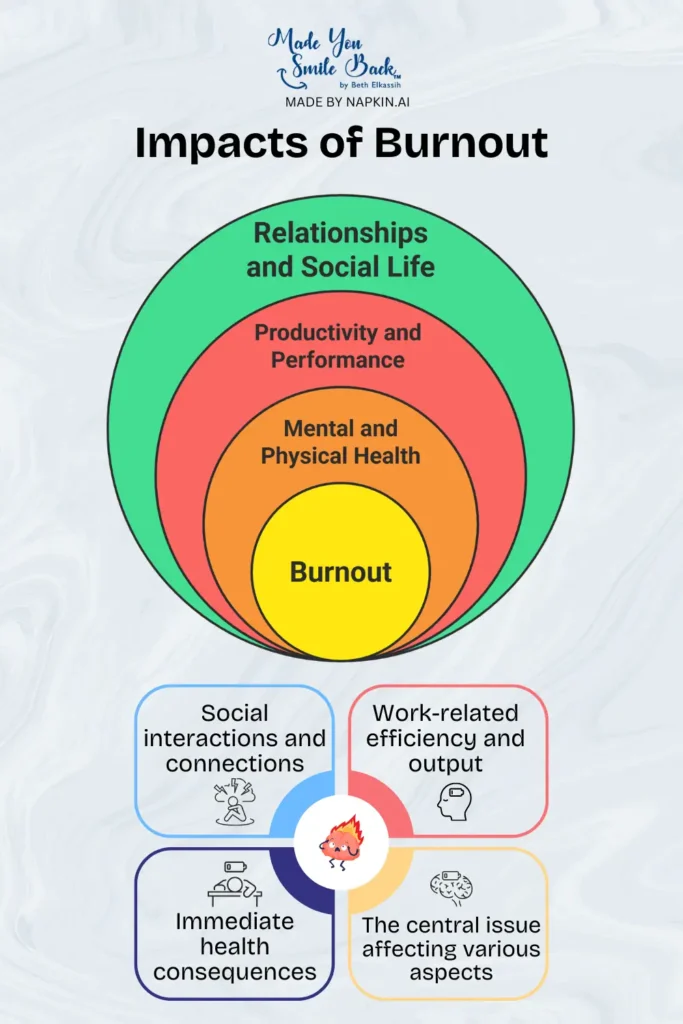
Burnout creates significant ripple effects throughout your life, affecting your health, work performance, and personal relationships in ways you might not immediately recognize.
On Mental and Physical Health
Burnout takes a serious toll on your mental wellbeing. You may experience depression and anxiety that persist beyond work hours. These aren’t just temporary feelings—research shows burnout can lead to diagnosable mental health conditions.
Physical symptoms often accompany burnout. Chronic headaches become more frequent as stress persists. Many people notice gastrointestinal problems like stomach pain or digestive issues.
Your cardiovascular system suffers too. High blood pressure is common among those experiencing burnout, putting you at risk for more serious complications.
The immune system weakens under prolonged stress, making you more vulnerable to chronic illness. You may catch colds more frequently or find existing health conditions worsen.
Sleep disturbances further compound these issues, creating a cycle where poor sleep enhances burnout symptoms.
On Productivity and Performance
Your work suffers significantly when burnout takes hold.
Productivity drops as tasks require more effort than before. Simple decisions become difficult, and concentration wavers throughout the day.
Reduced performance becomes noticeable to both you and others. Quality of work declines even when you’re putting in more hours. Studies indicate burnout leads to increased sick leave and absenteeism.
Creative thinking diminishes. You may find yourself:
- Unable to generate new ideas
- Struggling to solve problems
- Making more errors than usual
- Taking longer to complete routine tasks
Your motivation fades, creating a sense of detachment from work you once found meaningful.
On Relationships and Social Life
Burnout doesn’t stay contained at work—it follows you home.
Irritability becomes your default state, making interactions with loved ones tense. Small annoyances trigger disproportionate reactions.
You may notice a growing loss of interest in social activities. Friends and family might comment that you seem withdrawn or unavailable. Burned-out employees tend to withdraw from family life and maintain fewer friendships.
Save what you love, hover or tap the image and pin it now.
Prevention and Mitigation Strategies
Taking action against burnout requires a multi-faceted approach that addresses both professional and personal aspects of your life. Effective strategies combine boundary setting, deliberate self-care practices, and appropriate professional support.
Establishing Work-Life Balance
Setting clear boundaries between work and personal life is crucial for preventing burnout. Start by establishing fixed working hours and sticking to them consistently.
Practical boundary-setting techniques:
- Use separate devices or accounts for work and personal matters
- Create physical transitions between work and home (even in remote settings)
- Practice saying “no” to additional responsibilities when overloaded
- Communicate your availability clearly to colleagues and managers
Take regular breaks during your workday. Short 5-minute breaks every hour can refresh your mind and maintain productivity. Use vacation time fully and disconnect from work communications during off hours.
Prioritize open communication with your manager about workload concerns before reaching a breaking point. Negotiate for flexible arrangements when possible.
Self-Care and Mindfulness Practices
Consistent self-care activities serve as a buffer against burnout and help restore depleted energy.
Physical activity releases tension and improves mood. This can be structured exercise or simply walking outdoors.
Essential self-care practices:
- Regular physical activity (20-30 minutes daily)
- Adequate sleep (7-9 hours nightly)
- Nutritious eating patterns
- Hobbies that provide enjoyment outside of work
Mindfulness techniques help combat the mental exhaustion and cynicism common in burnout. Even brief daily meditation sessions of 5-10 minutes can significantly reduce stress levels.
Develop awareness of your personal stress signals—irritability, sleep changes, concentration problems—and respond promptly.
Schedule self-care activities in your calendar to ensure they happen consistently.
Seeking Support and Therapy
Don’t face burnout alone. Talking about your experiences with trusted friends or family can provide emotional relief and perspective.
Creating a support network helps combat isolation often associated with burnout.
Professional help becomes essential when burnout symptoms persist despite self-help efforts. Mental health professionals can provide tailored strategies and therapeutic approaches specifically for burnout recovery.
When to seek professional help:
- When symptoms interfere with daily functioning
- If you experience persistent negative thoughts
- When self-care efforts aren’t bringing relief
- If you notice increasing cynicism or detachment
Many workplaces offer Employee Assistance Programs providing confidential counseling sessions. These resources are often underutilized yet highly beneficial for addressing work-related stress.
Consider joining support groups, either in-person or online, where you can connect with others experiencing similar challenges.

Save what you love, hover or tap the image and pin it now.
Navigating Recovery
Recovery from burnout is a journey that requires intention and specific strategies. The path back to wellness involves professional guidance, daily habit changes, and gradual rebuilding of your mental and physical reserves.
Professional Help and Resources
Reaching out for help is a crucial first step in burnout recovery. Consider speaking with a mental health professional who specializes in stress management and burnout. They can provide personalized strategies and support tailored to your specific situation.
Professional Resources to Consider:
- Therapists specializing in burnout
- Workplace counseling services
- Support groups
- Online therapy platforms
Lifestyle Changes
Daily habits play a significant role in recovery from severe burnout. Regular physical activity – even just a 15-minute daily walk – can reduce stress hormones and improve your mood.
Nutrition matters too. Aim for balanced meals that stabilize your energy throughout the day, avoiding excessive caffeine or sugar that can worsen anxiety symptoms.
Prioritize sleep quality by establishing a consistent bedtime routine. Turn off screens at least 30 minutes before bed and keep your bedroom cool and dark.
Mindfulness practices have shown remarkable effectiveness for burnout recovery. Even 5 minutes of daily meditation can help regulate your stress response.
Set firm boundaries with work. This might mean turning off email notifications after hours or learning to say “no” to additional responsibilities.

Save what you love, hover or tap the image and pin it now.
Addressing Stigma and Workplace Culture
Workplace culture significantly impacts how burnout is perceived and addressed. Creating an environment where employees feel safe discussing their struggles is essential for preventing burnout before it becomes severe.
Creating a Supportive Environment
Breaking down the stigma around mental health in the workplace starts with normalizing conversations about stress and burnout. When you share your experiences, you help others feel less alone.
Employee resource groups focused on mental health can provide safe spaces for discussion. These groups reduce feelings of isolation that often accompany burnout.
Regular check-ins between team members create opportunities to voice concerns before they escalate. Consider implementing these practices:
- Peer support programs
- Mental health awareness days
- Destigmatizing language in company communications
- Anonymous feedback channels
Remember that stigma consciousness – awareness of how others perceive your identity – can intensify feelings of burnout among marginalized employees.
Organizational Changes and Policies
Effective burnout prevention requires structural changes to workplace policies. Flexible scheduling allows you to balance work demands with personal needs, reducing work-related stress.
Clear boundaries between work and personal time are crucial. This might include:
Policy Examples:
- No-email weekends
- Mandatory vacation usage
- Mental health days as part of sick leave
- Workload assessment protocols
Organizations should align rewards systems with values that prioritize well-being. When promotions only go to those working excessive hours, it reinforces burnout culture.
Parental burnout deserves special attention through family-friendly policies like extended parental leave and childcare support. Research shows that these policies improve retention and productivity.
Regular workload assessments help identify teams under excessive pressure before compassion fatigue sets in.
Role of Leadership and Communication
Leaders play a critical role in preventing burnout through their words and actions. When you as a manager openly discuss your own stress management, you signal that well-being matters.
Open communication between leadership and employees builds trust. Regular town halls and transparent decision-making reduce uncertainty that contributes to burnout.
Leaders should model healthy behaviors by:
- Taking breaks visibly
- Not sending emails during off-hours
- Discussing their own mental health strategies
- Acknowledging team achievements
Training managers to recognize early warning signs of burnout can lead to earlier interventions. Watch for changes in performance, increased cynicism, or withdrawal from team activities.
When leadership demonstrates a genuine commitment to addressing lack of support, employees feel valued and engagement increases.

Save what you love, hover or tap the image and pin it now.
Frequently Asked Questions
Burnout affects millions of people, manifesting through specific symptoms and following distinct stages. Burnout recovery requires targeted strategies that address both immediate symptoms and underlying causes.
What are the common signs and symptoms of burnout?
Burnout includes three general categories of symptoms: emotional exhaustion, depersonalization, and a sense of low personal accomplishment. You might notice persistent fatigue that doesn’t improve with rest.
Frequent body aches and physical exhaustion are common physical manifestations. Your body might feel heavy, and minor tasks can seem overwhelming.
Emotionally, you may experience detachment from work or caregiving responsibilities. This often appears as cynicism, irritability, or a feeling of going through the motions without engagement.
Decreased self-esteem and feelings of ineffectiveness often accompany burnout. You might question your abilities despite previous success.
What strategies can one implement to recover from burnout?
Set firm boundaries between work and personal life. This might mean turning off email notifications after hours or designating specific work-free zones in your home.
Prioritize physical well-being through adequate sleep, regular exercise, and balanced nutrition. Physical recovery supports emotional resilience.
Seek social support through trusted friends, family, or support groups. Sharing your experience reduces isolation and provides perspective.
Consider a temporary step back from overwhelming responsibilities when possible. This might mean using vacation time, requesting different assignments, or delegating tasks.
Practice mindfulness and stress-reduction techniques like meditation, deep breathing, or progressive muscle relaxation to reset your nervous system.
How do burnout symptoms differ from those of depression?
Burnout is typically context-specific and related to work or caregiving stress, while depression affects all areas of life. You might feel better away from the stressful environment if experiencing burnout.
Depression often includes feelings of worthlessness and hopelessness that persist regardless of situation. Burnout, however, maintains a connection to specific stressors.
Sleep disturbances differ between the conditions. With burnout, you might have trouble sleeping due to racing thoughts about responsibilities, while depression can cause either insomnia or excessive sleeping.
Burnout symptoms may improve with rest and removal of stressors, while depression typically requires more comprehensive treatment regardless of external circumstances.
Can you outline the stages of burnout progression?
The initial stage involves excessive drive and ambition, often accompanied by working longer hours. You might take on extra responsibilities and neglect personal needs.
In the second stage, you begin experiencing occasional fatigue, sleep disturbances, and reduced efficiency. You may notice decreased satisfaction despite continued effort.
The third stage brings chronic symptoms including persistent exhaustion, increased illness, and emotional volatility. Your work quality noticeably declines despite working harder.
Advanced burnout manifests as complete physical and emotional exhaustion, detachment, and cynicism. At this stage, you may experience an inability to function effectively in professional or personal contexts.
What are effective treatments for managing burnout?
Professional therapy, particularly cognitive-behavioral therapy (CBT), helps identify harmful thought patterns and develop healthier responses to stress. A therapist can provide personalized recovery strategies.
Workplace adjustments like modified schedules, different responsibilities, or improved resources can address environmental causes of burnout.
Stress management techniques include regular exercise, adequate sleep, and relaxation practices. These activities restore depleted physical and emotional resources.
Organizational support through employee assistance programs, wellness initiatives, or policy changes can create systemic improvements that prevent burnout recurrence.
How can burnout impact mental and physical health?
Burnout can lead to chronic physical health issues including cardiovascular problems, immune system suppression, and digestive disorders. Your body remains in a prolonged stress response.
Mental health impacts include increased vulnerability to anxiety disorders and depression. The chronic stress of burnout depletes psychological resilience.
Burnout may trigger unhealthy coping mechanisms like substance use, emotional eating, or social withdrawal. These behaviors can create additional health challenges.
Sleep disturbances from burnout create a cycle of fatigue that further compromises cognitive function and emotional regulation. This affects decision-making and relationship quality.
Save what you love, hover or tap the image and pin it now.
In Conclusion – Final Last Words
Burnout is a serious condition that affects many people in today’s fast-paced world. It has three main components: exhaustion, lack of motivation, and work-related problems.
Recognizing burnout early is essential. Some common signs include feeling constantly tired, losing interest in activities you once enjoyed, and experiencing physical symptoms like headaches or blurry vision.
Understanding the root causes of burnout can help you address it effectively. These often include workload issues, lack of control, and insufficient rewards for your efforts.
If you think you’re experiencing burnout, consider talking to a mental health professional. They can help rule out related conditions like depression and develop a personalized plan for recovery.
Remember that burnout is common but not inevitable. By identifying warning signs early and making necessary changes, you can protect your well-being and restore your energy and enthusiasm.