
When Life Doesn’t Always Go as Planned
🕒 Last Updated on March 5, 2025
When Life Doesn’t Always Go as Planned: Navigating Unexpected Challenges with Resilience
Life rarely follows the exact path we imagine. You make plans, set goals, and picture how things will unfold, only to face unexpected turns and detours.
These moments of uncertainty can feel overwhelming, leaving you wondering what to do next.
When life doesn’t go as planned, it’s not a failure but an invitation to discover new possibilities you hadn’t considered before.
Being honest with yourself about your mental state is the first step toward adapting.
You can acknowledge disappointment while still remaining open to what comes next.
Remember that some of the most valuable life lessons come from these unplanned experiences.
Instead of fighting against changed circumstances, try looking for advantages in your new situation.
You might discover strengths you didn’t know you had or opportunities that weren’t visible from your original path.
Get your Freebie



Save what you love, hover or tap the image and pin it now.
Understanding Uncertainty
Uncertainty is a natural part of life that everyone faces. Learning to navigate the unpredictable aspects of our journey can transform anxiety into opportunity and help us develop resilience.
Embracing the Unknown
The unknown isn’t something to fear but rather a companion on your life journey.
When you embrace uncertainty rather than resist it, you develop a more curious, flexible mindset.
Uncertainty invites you to question your assumptions and explore new possibilities.
Instead of clinging to rigid expectations, you can develop what some call an “uncertain mind” – one that remains curious, interested and malleable.

This flexible thinking becomes a form of wisdom. When you accept that you cannot predict or control everything, you free yourself from unnecessary suffering.
Try setting high but flexible goals.
This approach means that even when things don’t go as planned, you won’t fall too far from your intended path.
Coping with Surprise
Unexpected events often trigger anxiety because they challenge your sense of control.
When surprises occur, refocus your attention on the present moment rather than worrying about uncertain futures.
Deep breathing and mindfulness practices can help anchor you during unsettling times.
These techniques bring your awareness back to what you can control right now.
Remember that your response to surprises matters more than the surprises themselves.
You can choose to view unexpected changes as opportunities for growth rather than disasters.
Many people find that as they age, they become more comfortable with uncertainty.
This comfort doesn’t happen automatically—it develops through practice and experience.

Save what you love, hover or tap the image and pin it now.
Navigating Life’s Challenges
Life rarely follows our carefully laid plans. When unexpected turns occur, having strategies to move forward becomes essential to maintain your wellbeing and continue growing.
Overcoming Adversity
When life throws obstacles in your path, maintaining a positive mindset can make all the difference.
Your thoughts shape your reality, and choosing optimism even in difficult times helps you see possibilities rather than limitations.
Start by acknowledging your feelings without judgment.
It’s normal to feel frustrated or disappointed when things don’t go as expected.
Break down overwhelming challenges into smaller, manageable steps.
This approach prevents you from feeling paralyzed by the magnitude of what you’re facing.
Effective strategies can help you navigate uncertainties while continuing to progress.
Consider these practical approaches:
- Set realistic short-term goals
- Seek support from trusted friends or professionals
- Focus on what you can control, not what you can’t
Learning from Loss
Loss—whether of a relationship, opportunity, or dream—can be deeply painful. Yet these experiences often contain valuable life lessons that strengthen your resilience.
Take time to reflect on what the experience has taught you.
Every setback reveals something about your priorities, strengths, and areas for growth.
Living in the present helps you move forward after loss.
Focus on today rather than dwelling on past disappointments or worrying about future uncertainties.
Consider these reflection questions:
- What have you learned about yourself through this experience?
- How has this challenge changed your perspective?
- What strengths did you discover that you didn’t know you had?
Setting boundaries helps protect your energy during difficult times.
Learn to say no to activities or people that drain you while healing from loss.
Save what you love, hover or tap the image and pin it now.
Finding Purpose Amidst Disarray
When life takes unexpected turns, discovering meaning becomes both challenging and essential. Finding your path forward requires honest self-reflection and deliberate action that aligns with your deepest values.
Clarifying Your Calling
Finding your purpose starts with quiet introspection.
Ask yourself what activities make you lose track of time and what problems you feel drawn to solve. These clues often point to your natural strengths and passions.
Your calling might emerge from giving your time freely to causes that matter to you.
Volunteer work creates space to discover what truly resonates with your values.
Remember that your job isn’t necessarily your purpose.
As noted in discussions about finding meaning in simple living, true purpose comes from within—from your passions and what matters most to you.
Try making a simple list:
- What energizes me?
- Who do I admire and why?
- What problems do I wish I could solve?
Aligning Actions with Intentions
Once you’ve identified elements of your purpose, take small, consistent steps toward it.
When life feels chaotic, even tiny movements in your chosen direction create momentum and meaning.
Physical movement itself can help clarify your thinking. Walking, running, or other exercise often creates mental space for insights about your purpose to emerge.
Create a daily practice of intentional actions.
Each morning, identify one thing you can do that day that aligns with your emerging sense of purpose. This builds a bridge between your current reality and your desired direction.
When unexpected challenges arise, ask yourself: “How might this circumstance actually support my deeper purpose?”
Sometimes what appears as failure contains valuable lessons that strengthen your resolve and clarify your path.
Save what you love, hover or tap the image and pin it now.
The Role of Support Systems
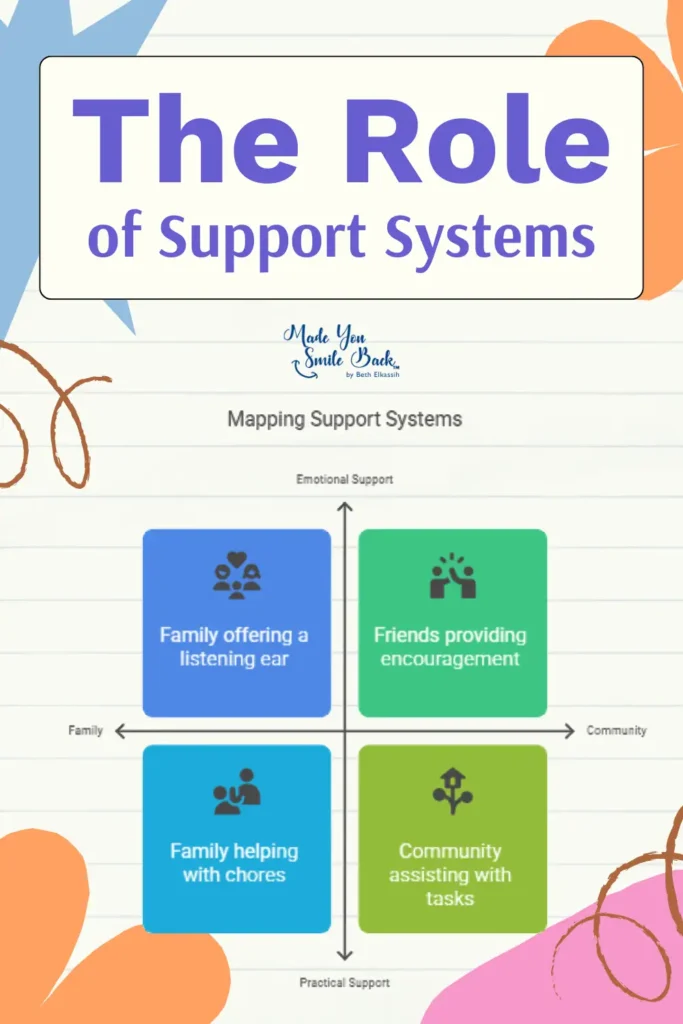
When life takes unexpected turns, having people to lean on can make all the difference. Support systems provide stability, comfort, and practical help during challenging times.
Importance of Family
Family often forms the foundation of your support system. These are the people who know your history and understand your struggles on a deeper level.
They can offer both emotional backing and practical assistance when you need it most.
During difficult times, family members can help share responsibilities that might otherwise feel overwhelming.
This isn’t a sign of weakness—utilizing a support system is actually a strength.
When you’re feeling lost, family can be a source of hope.
They often remind you of your capabilities and help you see beyond current challenges.
Types of family support:
- Emotional support: Listening and empathy
- Practical help: Assistance with daily tasks
- Financial support: Help during economic hardship
Community and Connection
Beyond family, your broader community provides another vital layer of support.
This includes friends, coworkers, neighbors, and various social groups that create a sense of belonging.
A great support system builds you up, keeps you strong, and pushes you to do your best even during difficult times.
Community connections offer different perspectives and resources that family alone might not provide.
Being part of a community helps maintain hope when facing uncertainties. You gain strength knowing others have overcome similar challenges.
Community support can also reduce isolation—a common feeling when plans go awry.
Research shows that strong social networks contribute to higher levels of well-being and better coping skills.
Remember that accepting community help doesn’t diminish your independence. Rather, it acknowledges our human need for connection.

Save what you love, hover or tap the image and pin it now.
Incorporating Spirituality
Connecting with something greater than yourself can provide comfort when life takes unexpected turns. Spiritual practices offer guidance and a sense of purpose that can help you navigate challenging times.
Faith in Times of Uncertainty
When plans fall apart, turning to spiritual beliefs can provide a foundation of stability.
The wisdom found in spiritual texts often reminds us that despite our careful planning, life sometimes follows a different path.
As the proverb states, “Many are the plans in a person’s heart, but it is the LORD’s purpose that prevails.”
This perspective helps you step back and consider that there might be a larger plan at work.
During uncertain times, try these spiritual practices:
- Begin each day with a moment of reflection or prayer
- Read inspirational texts that provide wisdom
- Connect with a community that shares your beliefs
- Journal about your thoughts and feelings
You might find that uncertainty becomes less frightening when viewed through a spiritual lens.
Drawing Strength from Belief
Your spiritual beliefs can be a powerful source of hope when facing difficult situations.
Thinking about positive experiences and answered prayers can remind you of God’s presence and goodness in your life.
Spiritual strength often comes from simple daily practices. You can incorporate spirituality through:
- Asking for help through prayer
- Practicing gratitude for what remains constant
- Meditating on spiritual teachings
- Finding meaning in your challenges
These practices help you integrate your experiences with something more timeless than yourself.
Spirituality provides a way to make sense of difficult circumstances and find purpose beyond your immediate challenges.
When you draw on spiritual resources, you access wisdom that has guided people through difficulties for generations.
Save what you love, hover or tap the image and pin it now.
Frequently Asked Questions
Life’s unpredictability raises natural questions about how to navigate unexpected turns and adapt our mindset when reality differs from our plans.
These questions help us develop resilience and find meaning in life’s detours.
Why does nothing ever seem to go as planned in my life?
When you feel like nothing goes as planned, you might be setting unrealistic expectations. Life naturally contains variables outside your control.
Your focus might also be on the deviations rather than on what actually worked out. Our minds tend to highlight discrepancies between expectations and reality.
Try examining your planning approach.
Are you allowing flexibility for unexpected circumstances? Rigid plans are more likely to feel “failed” when small adjustments become necessary.
What do you call the phenomenon when life’s events don’t align with your expectations?
This gap between expectation and reality is often called “expectation discrepancy” or “cognitive dissonance.” These terms describe the mental discomfort when your beliefs don’t match your experiences.
Psychologists sometimes refer to it as an “expectation violation.” This occurs when your anticipated outcomes differ significantly from what actually happens.
Some philosophies call this “life’s uncertainty principle” – recognizing that perfect prediction and control of outcomes is impossible in a complex world.
How can one cope with the reality that life often doesn’t unfold as anticipated?
Developing flexibility in your thinking allows you to adapt when reality falls short of your expectations.
Practice accepting what you cannot change.
Build resilience by viewing challenges as opportunities for growth rather than as failures. This perspective shift can transform disappointments into valuable life lessons.
Create contingency plans for important goals. Having a Plan B (and C) reduces anxiety and provides direction when original plans need adjustment.
Can there be hidden benefits to life’s unexpected turns?
Unexpected turns often reveal opportunities you couldn’t have imagined within your original plan.
Many innovations and personal breakthroughs emerge from unforeseen circumstances.
These diversions can introduce you to new people, interests, and capabilities you might never have discovered otherwise.
Your strongest skills sometimes develop through unplanned challenges.
Life’s detours often add richness and depth to your experience that a straight path might have missed. Many people later recognize that their most meaningful life chapters weren’t part of their original plan.
How should one approach setting goals knowing that outcomes may diverge from plans?
Set direction-based goals rather than rigid outcome-specific targets. Focus on moving toward a general destination while remaining open to different paths.
Include flexibility in your timelines and expectations.
When life doesn’t go as planned, it’s time to adjust rather than abandon your aspirations.
Practice regular reassessment of your goals. Ask yourself if they still align with your values and current reality, making adjustments as your life evolves.
What strategies are effective for managing disappointment when life deviates from one’s plans?
Allow yourself to acknowledge disappointment without judgment.
Accepting your feelings is the first step toward moving forward constructively.
Practice reframing situations by asking “What can I learn from this?” or “How might this lead to something positive?”
This shifts focus from loss to potential.
Connect with others who have faced similar challenges.
Sharing experiences reduces isolation and provides new perspectives on navigating unexpected changes.
Save what you love, hover or tap the image and pin it now.
In Conclusion – Final Last Words
Our lives can change quickly and unexpectedly. In those situations, it’s hard to know what to do.
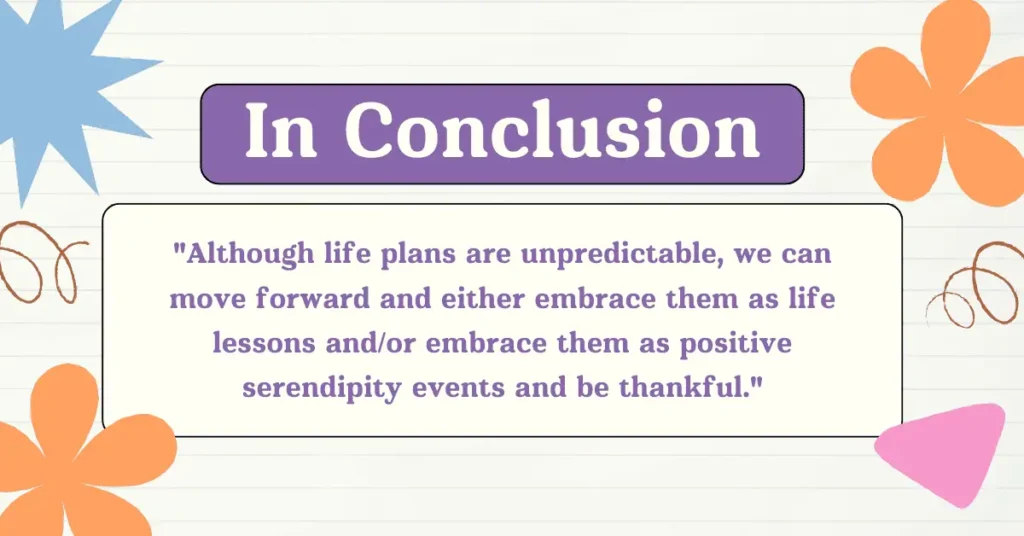
But as this blog tells us, although life plans are unpredictable, we can move forward and either embrace them as life lessons and/or embrace them as positive serendipity events and be thankful.