The Powerful Emotion Known as Tears of Happiness
🕒 Last Updated on May 1, 2025
What is this Emotion Called ‘Tears of Happiness’?
Made You Smile Back is so pleased to present this new, albeit intriguing blog, exploring the powerful emotion known as ‘Tears of Happiness’. We shall explore exactly what this emotion is, the four types of ‘Tears of Happiness’ plus all the wonderful benefits that crying provides to us.
In addition, we shall learn the difference between ‘tears of happiness’ and “tears of sadness and grief”. Then to round things up, Made You Smile Back will show us how to find the right balance and to make things fun, our own ‘Tears of Happiness Quotes’.
Table of ContentsToggle
And as always, we have our ‘Frequently Asked Questions’ at the end of the blog to wrap things up. Let’s get started… shall we?http://madeyousmileback.com/inspirational-quotes

Save what you love, hover or tap the image and pin it now.
What Are Happy Tears and Why Do We Shed Them?
Ever found yourself crying in the middle of a really happy moment? This emotional response—what folks call “tears of happiness” or “tears of joy“—is surprisingly common, though it can catch you off guard.
These kinds of tears show up when positive emotions just get too intense, triggering the same physical reaction as sadness. It’s like your body can’t hold all that feeling, so it spills out as tears, even though you’re not actually sad.
Tears of happiness can pop up in all sorts of situations:
- Moments of overwhelming pride
- Witnessing something deeply moving
- Feeling intense relief
- Getting hit with unexpected joy
Happy tears tend to come with other reactions, too. You might find yourself smiling and crying at the same time, or even laughing through tears.
- Smiling while crying
- Laughing as you tear up
- A warm, swelling feeling in your chest
- Goosebumps or a little tingle
Some scientists think this reaction actually serves a purpose, both emotionally and physically. When you get tears of joy, your body releases built-up tension and helps you get back to a balanced state.
Get your Freebie


This kind of crying can also show others that your happiness is real, which probably helps strengthen social bonds. The physical makeup of happy tears is different, too—apparently, they contain slightly different enzymes and hormones than tears from sadness or irritation.
Maybe that’s why crying when you’re happy feels so oddly refreshing. Ever notice that swelling feeling in your chest during a concert or a big group event? That’s your body gearing up for a joyful tear response, connecting you to everyone around you.
Save what you love, hover or tap the image and pin it now.
Why Tears of Joy Create Such Powerful Emotional Experiences
When you get tears of joy, you’re tapping into something uniquely human. These tears show up in the middle of huge, positive moments—like holding a newborn, snagging that diploma, or hearing good news about someone you love.
These emotional tears actually help you keep your balance when happiness gets overwhelming. Your body uses them to:
- Regulate those intense positive emotions
- Release pent-up emotional tension
- Process feelings that are just too much
- Restore a sense of equilibrium
It’s kind of wild—no other animal cries from joy like this. It’s a weirdly human thing.
Think about times when you just got flooded with emotion:

| Emotion | Typical Tear-Triggering Moments |
|---|---|
| Joy | Weddings, births, reunions |
| Relief | Medical good news, passing tests |
| Pride | Graduations, achievements |
| Love | Meaningful connections, heartfelt moments |
Your body uses tears as a kind of pressure valve. The tears themselves function as a release for all that built-up energy.The Powerful Emotion Known as Tears of Happiness
Save what you love, hover or tap the image and pin it now.
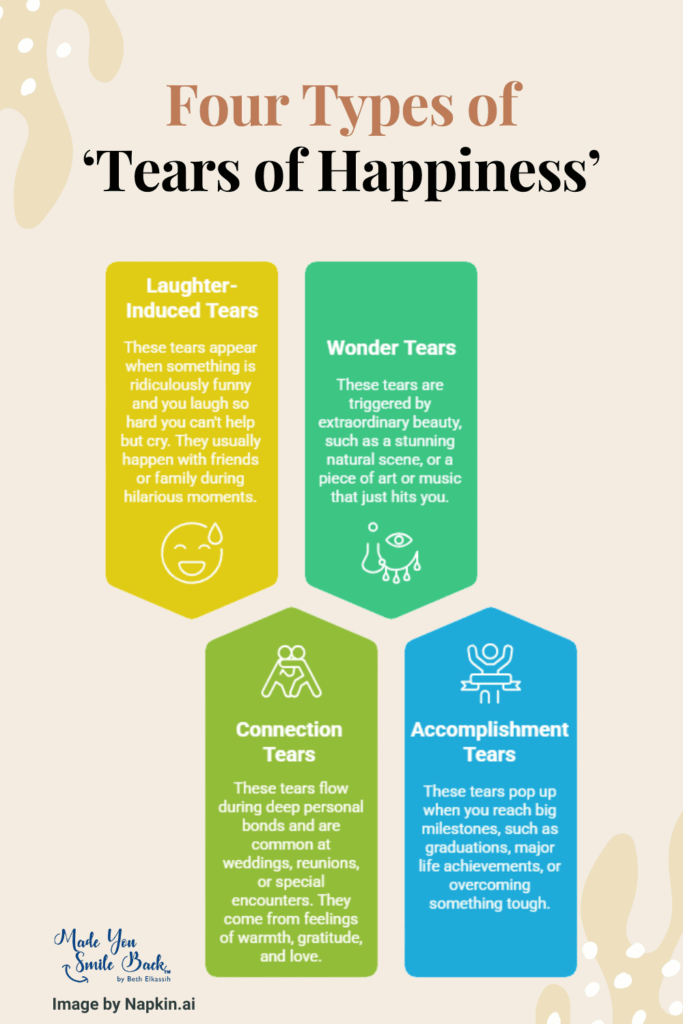
Four Types of ‘Tears of Happiness’
When you get hit with intense positive emotions, you might end up crying tears that have nothing to do with sadness. Turns out, these “tears of happiness” actually fall into four main types:
Laughter-Induced Tears
- Show up when something is just ridiculously funny
- Happen when you laugh so hard you can’t help but cry
- Usually with friends or family during hilarious moments
Connection Tears
- Flow during deep personal bonds
- Common at weddings, reunions, or special encounters
- Come from feelings of warmth, gratitude, and love
Wonder Tears
- Triggered by extraordinary beauty
- Could be a stunning natural scene, or a piece of art or music that just hits you
Accomplishment Tears
- Pop up when you reach big milestones
- Graduations, major life achievements, overcoming something tough
Culture actually shapes which types of happy tears you’re most likely to experience. In more individualistic Western countries, people tend to cry from wonder or amusement. In cultures where community matters most, tears usually flow during connection moments.
Gender makes a difference, too. Women generally experience tears of happiness more often than men, no matter the category.
So next time you start tearing up during a happy moment, maybe pause and wonder: is this from amusement, affection, beauty, or achievement? It’s kind of interesting to notice.https:///madeyousmileback.com/blogs/
Save what you love, hover or tap the image and pin it now.
What Happens When You Cry Happy Tears
When you cry happy tears, your body goes through some pretty positive changes. Your brain releases oxytocin and endorphins—those natural chemicals that make you feel good. These “feel-good brain transmitters” can send a wave of calm or warmth through your whole system.
Some perks of happy tears:
- Stress relief—crying helps let go of tension
- Longer-lasting good feelings—the hormones keep the joy going
- Emotional regulation—crying helps you process all that happiness
Maybe that’s why you often feel so much better after crying, even if you were happy to begin with. It’s your body’s way of keeping things balanced.
This is one of the wonderful health benefits of shedding tears of joy. What happens is your body starts to release oxytocin and endorphins. This in turn provides a period of extended emotion and stress is then relieved while you’re crying your ‘tears of happiness’. http://madeyousmileback.com/blogs/
Save what you love, hover or tap the image and pin it now.
How Emotional Tears Differ From Each Other
Crying is a healthy way to let out feelings, and it really can help you feel better. When you cry because of emotions—sadness or happiness—you’re making what experts call psychic tears.
Funny enough, tears of happiness and sadness are chemically pretty similar. Both are sparked by strong emotion and share a lot of the same ingredients.
That’s different from the tears you get when:
- Chopping onions
- Getting dust in your eye
- Having allergies act up
Those are called reflex tears or basal tears. They’re designed to protect your eyes and flush out irritants—totally different from emotional tears.
No matter why you’re crying, though, it’s a natural reaction. Tears work as protection for your eyes, but also as an emotional release—and honestly, sometimes you just need it.The Powerful Emotion Known as ‘Tears of Happiness’
Save what you love, hover or tap the image and pin it now.
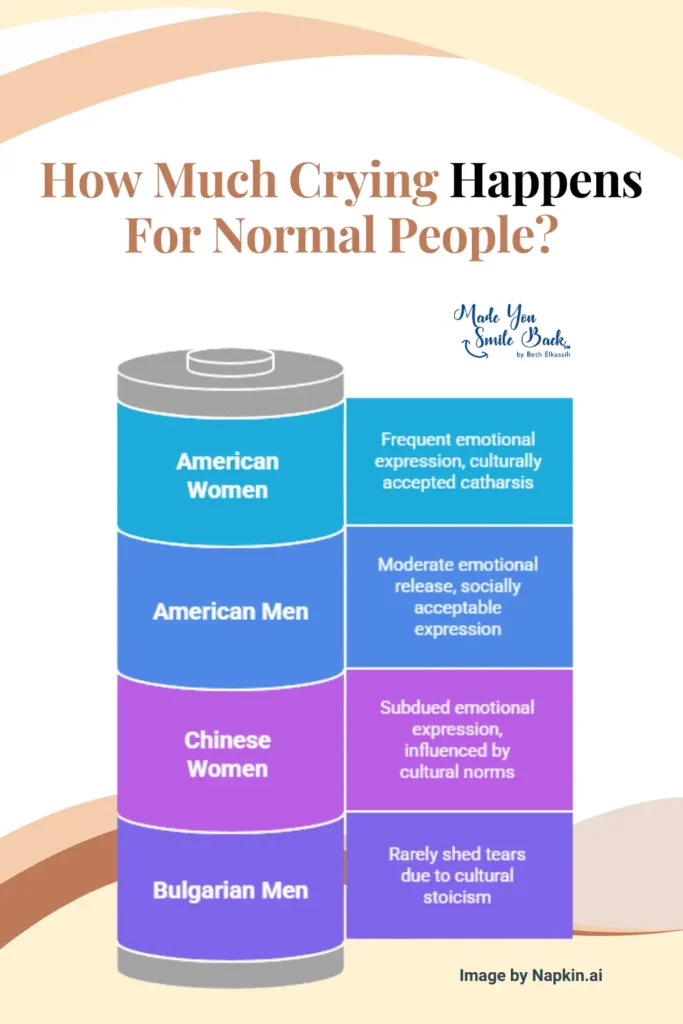
How Much Crying Happens For Normal People?
Crying habits vary a lot between people, and even more between cultures and genders. In the U.S., women typically cry about 3.5 times a month, while men average around 1.9 times. That’s actually high compared to some other countries.
Culture really shapes how often folks cry:
| Country | Women (times per month) | Men (times per month) |
|---|---|---|
| United States | 3.5 | 1.9 |
| China | 1.4 | Not specified |
| Bulgaria | Not specified | 0.3 |
Why the difference? It probably comes down to hormones, how people are taught to show emotion, and good old social conditioning.
- Hormonal differences
- How people express feelings
- Social norms
Your own crying habits might not match these averages, and that’s totally okay. Everyone’s got their own way of processing emotions, and how often you cry depends on your personality and life situation. However often it happens, crying is just your body’s way of letting off a little emotional steam.
Save what you love, hover or tap the image and pin it now.
Why Tears Are Valuable
Crying isn’t a sign of weakness—it’s a powerful way to express emotion. When you feel tears coming, just let them flow.
Tears of happiness can restore emotional balance and help you manage big feelings.
Your tears serve important purposes:
- They release emotional pressure
- They communicate feelings words can’t quite reach
- They connect you with others through shared vulnerability
- They help process both joy and sadness
When you witness touching moments—like children playing with pure joy—your emotional response is natural and healthy.
Many psychologists believe these emotional tears help your overwhelmed system regain stability.
Your tears are powerful messengers of your deepest feelings. They show your capacity to feel deeply and connect with life’s most meaningful moments.
Emotions That Bring Happy Tears
Sometimes your heart fills with so much happiness that it spills out as tears. These moments of joy can catch you off guard.
Here are some quotes that capture this feeling:
- When sunshine breaks through rain clouds, it’s like joy piercing through sadness
- Your happy smile often sits just a small step away from tears
- In moments of overwhelming relief, words fail but tears speak volumes
- Remember you can transform sorrow into joy, changing the meaning of your tears
These emotional moments remind you that tears aren’t always sad—they can be beautiful expressions of your deepest happiness.
Tears of Happiness Quotes
“Tears of joy are like the summer rain drops pierced by sunbeams.”
“Joy’s smile is much closer to tears than laughter.”
“Who among us is not at a loss for words? Tears pour out. Tears of joy. Tears of relief. A stunning, whopping landslide of hope in a time of deep despair.”
“Turn your tears of sadness into tears of happiness.” – By Beth Elkasshi
Save what you love, hover or tap the image and pin it now.
FREQUENTLY ASKED QUESTIONS
1. What are tears of happiness?
Happy tears happen when you experience emotions so intense they become overwhelming and unmanageable. When these emotions begin to overwhelm you, you might cry or scream (perhaps both) in order to help get those emotions out.
2. What emotion is tears of joy?
It’s not known exactly why we cry tears of happiness or how they are different from tears of anger or sadness. But when we cry due to something we think of as good, rather than something that’s sad, we call our tears “tears of joy”. You don’t just shed tears when you’re upset.
3. Why do I cry when others cry?
Many times, people who are considered ‘empaths’ feel the emotion of others. Dubbed “emotional contagion,” it occurs when you’re interacting with someone who is feeling something strong that in turn causes you to take on that same emotion, according to social psychologist Daniel Rempala, PhD.
4. How do people cry tears of joy?
The short answer is that crying intensifies life’s happiest moments. Our tears release neurotransmitters known as oxytocin, which are also known as a ‘feel good’ transmitter which simply makes you feel better and uplifts your spirit.
5. Is it healthy to cry?
It’s most definitely okay to shed tears of happiness or even tears of sadness. It may even be beneficial to you. If you feel the need to cry, don’t hold back your tears. Tears are a normal, healthy way to express emotion.
Save what you love, hover or tap the image and pin it now.
In Conclusion – Final Last Words
This blog post explores the phenomenon of crying tears of joy. While crying is often associated with sadness, tears can also be a powerful expression of happiness and other positive emotions.
We dived in and looked into the science behind tears of joy, explaining that they are a result of the body’s autonomic nervous system being overwhelmed with emotion.
This intense emotional response can be triggered by a variety of experiences, such as witnessing a birth, getting married, or achieving a significant goal.
Remember, tears of happiness are a uniquely human experience, as no other species has been observed crying in response to positive events.
Learn to cherish the moments that bring you to tears of happiness and to recognize the beauty and significance of this powerful emotional response.
It’s Your Turn… Leave in the Comments Below when YOU last experienced the powerful emotion of ‘Tears of Happiness’?