Mental Peace: Practical Strategies for a Balanced Mind
🕒 Last Updated on January 23, 2026
You live in a world that moves fast and demands more every day.
Between work, relationships, and constant noise, it’s easy to lose your sense of calm.
Mental peace means feeling steady and balanced even when life feels uncertain.
It’s not about avoiding stress but learning how to stay centered through it.
You can build this calm state by understanding what affects your mind and how your habits shape your emotions.
When you learn to manage daily pressures with mindfulness, care, and gratitude, you create space for clarity and focus.
This article will help you explore what mental peace really means, what gets in its way, and how to strengthen it through mindful routines, supportive relationships, and simple daily practices.
Understanding Mental Peace

Save what you love, hover or tap the image and pin it now.
Mental peace helps you manage stress, maintain emotional balance, and think clearly even when life feels uncertain.
It supports your mental well-being by promoting calmness, focus, and a stable mental state that allows you to act with intention instead of reaction.
Get your Freebie


Definition and Core Concepts
Mental peace refers to a state of emotional and psychological balance where your thoughts and feelings remain calm and steady.
It is not the absence of problems but the ability to stay centered while facing them.
You can think of mental peace as a combination of self-awareness, emotional control, and acceptance.
These elements help you respond thoughtfully instead of reacting impulsively.
Researchers describe mental peace as part of overall mental well-being.

It involves understanding how your thoughts, emotions, and environment interact.
When you manage these influences, you create a stable foundation for clarity and resilience.
Practices like mindfulness, breathing exercises, and journaling often support this process.
They help you pause, notice your thoughts, and choose calm responses rather than emotional reactions.
The Importance of Mental Peace
Maintaining mental peace improves how you handle daily stress and long-term challenges.
It supports better decision-making, stronger relationships, and a healthier body.
When you experience peace of mind, your body releases fewer stress hormones, which can lower blood pressure and improve sleep quality.
You also think more clearly and communicate more effectively.
According to Psych Central, developing habits that calm your mind helps you manage anxiety and emotional turmoil.
Mental peace also strengthens resilience.
You recover faster from setbacks because your emotions stay balanced.
This stability allows you to focus on goals without being overwhelmed by frustration or fear.
Mental Peace vs. Inner Peace
Although people often use mental peace and inner peace interchangeably, they describe slightly different experiences.
Mental peace focuses on your thoughts and emotions, while inner peace includes a deeper sense of spiritual or personal harmony.
You achieve mental peace by managing your mental state through awareness and self-regulation.
Inner peace, by contrast, may come from aligning your actions with your values or beliefs.
As explained in Pursuing Mental Peace: A Comprehensive Guide, mental peace helps you stay calm and clear-minded, while inner peace connects you to a lasting sense of contentment.
| Aspect | Mental Peace | Inner Peace |
|---|---|---|
| Focus | Emotional and mental balance | Spiritual or personal harmony |
| Method | Mindfulness, reflection, emotional control | Acceptance, purpose, connection |
| Outcome | Calmness and clarity | Deep contentment and fulfillment |
Understanding this distinction helps you identify what kind of peace you need to nurture in your life.
Common Barriers to Mental Peace

Save what you love, hover or tap the image and pin it now.
Daily pressures, digital distractions, and constant mental noise can make it hard to stay calm and balanced.
You often face emotional and environmental triggers that disturb your focus and affect your mental health.
Stress and Anxiety
Stress and anxiety are among the most common barriers to mental peace.
They can come from work deadlines, financial strain, or relationship issues.
When your body stays in a constant state of alert, it becomes difficult to relax or think clearly.
Long-term stress can raise your heart rate, tense your muscles, and weaken your immune system.
Over time, it can contribute to burnout and emotional exhaustion.
According to The Calm Life, excessive stress and anxiety can be debilitating when not managed properly.
To reduce these effects, try simple steps such as deep breathing, regular exercise, and structured routines.
You can also track triggers that cause stress and plan ways to minimize them.
Even small changes, like stepping outside for fresh air, can help you reset your mind.
| Helpful Techniques | Description |
|---|---|
| Mindful breathing | Calms the nervous system |
| Physical activity | Reduces tension and boosts mood |
| Scheduled breaks | Prevents mental overload |
Negative Thought Patterns
Negative thought patterns can quietly erode your sense of peace.
When you constantly criticize yourself or expect the worst, your brain stays in a loop of worry and doubt.
Over time, this mindset increases anxiety and lowers confidence.
Psych Central explains that mental barriers like fear and self-doubt affect many people and can block progress.
Recognizing these thoughts is the first step toward change.
You can challenge negative thinking by writing down unhelpful thoughts and replacing them with realistic ones.
For example, instead of “I always fail,” try “I can learn from mistakes.”
Practicing gratitude also helps shift your focus from what’s wrong to what’s working.
Tip: Keep a short daily journal to reflect on positive moments and reduce mental clutter.
Impact of Screen Time
High screen time can interfere with mental peace by overstimulating your brain.
Constant notifications, social media comparisons, and news updates can raise stress and anxiety.
The MindNation blog notes that digital distractions can block mindfulness and calm.
When you spend hours scrolling, your mind rarely gets a chance to rest.
Blue light exposure before bed can also disrupt your sleep, which affects mood and focus the next day.
To regain balance, set screen limits and schedule tech-free periods during your day.
Try keeping devices out of reach during meals or before bedtime.
You can also use “Do Not Disturb” settings to reduce interruptions.
| Digital Habit | Simple Fix |
|---|---|
| Late-night scrolling | Turn off screens 1 hour before bed |
| Constant notifications | Use silent or focus modes |
| Social media overload | Limit usage to set times |
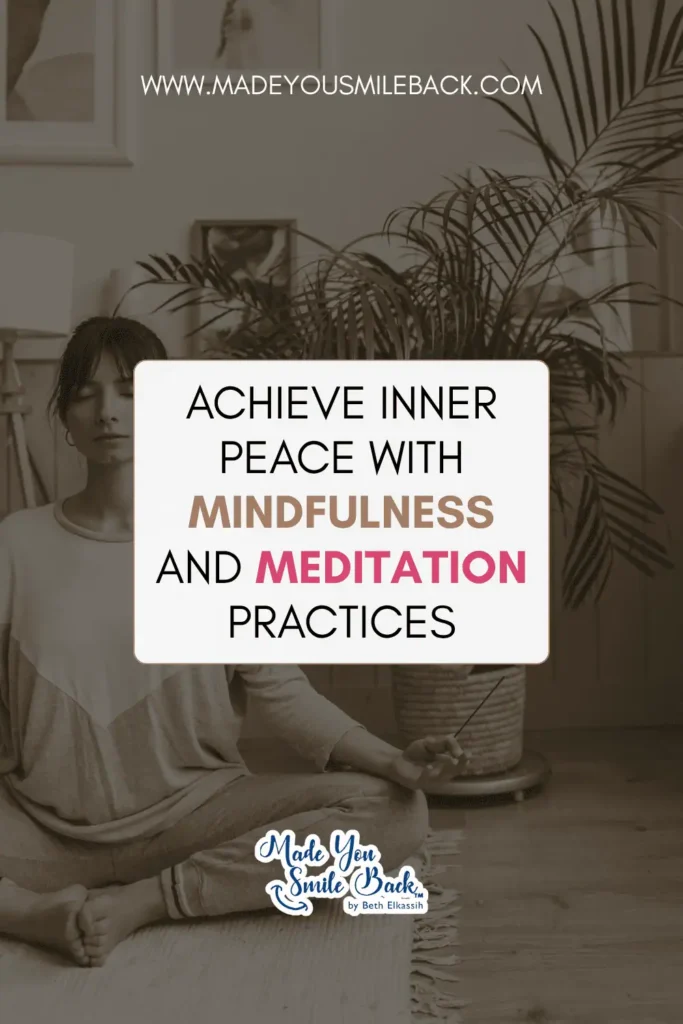
Achieve Inner Peace with Mindfulness and Meditation Practices
Save what you love, hover or tap the image and pin it now.
You can strengthen your mental peace by training your mind to focus, relax, and stay present.
Practicing meditation, mindful breathing, and guided sessions helps you manage stress, balance emotions, and improve awareness of your mental state.
Meditation Techniques
Meditation helps you slow down and observe your thoughts without judgment.
You can begin by sitting comfortably, closing your eyes, and focusing on your breath.
When your mind wanders, gently bring your attention back.
Try mindfulness meditation, which teaches you to notice sensations, sounds, and emotions as they arise.
Another method, body scan meditation, involves mentally scanning your body from head to toe to release tension.
You can explore structured approaches like mindfulness-based stress reduction, which combines meditation with practical coping strategies.
Consistent practice, even for a few minutes daily, can help you feel calmer and more aware.
Deep Breathing Exercises
Deep breathing supports relaxation by lowering your heart rate and calming your nervous system.
You can start with diaphragmatic breathing, where you inhale deeply through your nose, letting your stomach rise, then exhale slowly through your mouth.
Try the 4-7-8 method: inhale for 4 seconds, hold for 7, and exhale for 8.
Repeat this cycle several times to reduce stress and improve focus.
Integrating mindful breathing into your day can make a noticeable difference in your mental state.
According to Positive Psychology, brief breathing exercises enhance emotional regulation and mental clarity when practiced regularly.
Guided Meditation for Calmness
Guided meditation uses verbal instructions to help you stay focused.
You can listen to recordings or attend sessions that lead you through visualization, breathing, or relaxation steps.
Many people find guided sessions easier than silent meditation because they provide structure and direction.
Platforms such as Healthy Habits Peak explain how guided meditation helps you slow down and connect with the present moment.
You might visualize peaceful scenes or repeat calming phrases to relax your mind.
Over time, guided practice can help you manage stress and maintain mental balance.
Daily Mindfulness Habits
Mindfulness works best when you make it part of your daily routine.
Simple actions—like eating slowly, walking mindfully, or pausing before responding—help you stay aware of your thoughts and surroundings.
Set reminders to take short breaks for breathing or reflection.
You can also keep a mindfulness journal to note moments of calm or distraction.
As described in River City Therapy’s mindfulness guide, consistent mindfulness habits improve focus, reduce stress, and support emotional well-being throughout the day.
Self-Care and Healthy Routines

Save what you love, hover or tap the image and pin it now.
Building habits that support your mental well-being takes consistency and attention to your body’s needs.
Small, intentional actions—such as daily movement, restful sleep, and mindful self-care—help you stay balanced and calm.
Establishing a Self-Care Routine
A good self-care routine includes daily activities that support your physical and emotional health.
You can start by identifying what helps you feel calm and focused.
This might include journaling, short walks, or quiet time away from screens.
Try to schedule these activities as you would any other commitment.
Consistency matters more than duration.
Even ten minutes of focused self-care can reduce stress and improve your mood.
You can explore practical steps for creating a personalized plan through self-care routines for mental health.
Keeping routines realistic makes them easier to maintain.
| Example Self-Care Activities | Duration | Benefit |
|---|---|---|
| Deep breathing exercises | 5 minutes | Lowers stress |
| Journaling | 10 minutes | Organizes thoughts |
| Outdoor walk | 15 minutes | Boosts mood |
Physical Activity and Stretching
Physical movement supports both your body and mind.
Regular exercise releases endorphins that help you feel more positive and focused.
You don’t need an intense workout; gentle stretching or a short walk can make a difference.
Start with simple routines such as shoulder rolls, leg stretches, or neck rotations.
These movements relieve tension from sitting or working for long hours.
According to research on mental health routines, repeatable habits like light exercise help you feel grounded and calm.
You can track your progress in a notebook or app to stay motivated.
Sleep and Rest
Sleep plays a central role in mental peace.
Without enough rest, your mood, focus, and energy can decline.
Aim for 7–9 hours of sleep each night and keep a consistent bedtime.
Create a relaxing routine before bed.
Limit screen time, dim lights, and avoid caffeine late in the day.
Listening to soft music or reading can help your mind slow down.
Building strong sleep habits supports emotional balance and resilience.
As explained in daily self-care practices for mental wellness, rest allows your body and mind to recover from daily stress.
Yoga for Mental Peace
Yoga combines movement, breathing, and mindfulness.
It encourages you to focus on the present moment while easing physical tension.
Regular practice can improve flexibility and promote relaxation.
You can begin with basic poses such as Child’s Pose, Cat-Cow, or Mountain Pose.
These gentle movements help release tight muscles and calm your breathing.
Practicing yoga regularly supports mental clarity and emotional stability.
Simple routines like those described in mindfulness self-care activities can help you maintain inner peace.
Consistent practice, even for a few minutes a day, strengthens both body and mind.
Emotional Well-Being and Relationships

Save what you love, hover or tap the image and pin it now.
Emotional well-being depends on how you manage emotions, handle conflict, and connect with others.
You maintain peace of mind when you accept what you cannot change, forgive when possible, act with compassion, and build relationships that support your mental health.
Acceptance and Letting Go
Acceptance helps you face life as it is instead of how you wish it to be.
You build inner calm when you stop resisting reality and focus on what you can control.
Letting go of resentment, guilt, or regret allows your mind to rest and move forward.
You can practice acceptance by noticing your thoughts without judging them.
When you accept your emotions, they lose power over you.
This process supports emotional balance and reduces stress.
| Practice | Benefit |
|---|---|
| Mindful breathing | Helps release tension |
| Journaling | Clarifies thoughts and emotions |
| Talking with a trusted person | Encourages perspective and clarity |
Learning to let go does not mean giving up.
It means choosing peace over constant struggle, which strengthens your emotional well-being.
Practicing Forgiveness
Forgiveness frees you from the weight of anger and bitterness.
Holding on to resentment can harm your mental health and relationships.
When you forgive, you choose emotional freedom over emotional pain.
You can forgive by recognizing that everyone makes mistakes, including you.
This does not excuse harmful actions but helps you stop reliving them.
The CDC notes that healthy relationships and emotional support improve your ability to cope with life’s challenges.
Try these steps:
- Admit what hurt you.
- Decide to release the anger.
- Replace resentment with understanding.
Building Compassion
Compassion means caring about others’ feelings and responding with kindness.
It improves connection and reduces conflict.
When you act with compassion, you support both your emotional health and that of others.
You can build compassion by listening without judgment and offering help when needed.
Practicing empathy helps you understand different perspectives.
Research on inner peace practices shows that mindfulness and self-care increase emotional stability and compassion.
Ways to strengthen compassion:
- Use kind language.
- Show appreciation often.
- Reflect on how your actions affect others.
Fostering Healthy Relationships
Healthy relationships give you a sense of belonging and stability.
They lower stress and improve mental health.
The NIH explains that emotional wellness includes handling stress and adapting to change, both of which are easier with supportive connections.
You can foster healthy relationships by communicating clearly and respecting boundaries.
Practice active listening and express appreciation regularly.
Avoid relationships that drain your energy or make you feel unsafe.
Key traits of healthy relationships:
| Trait | Description |
|---|---|
| Trust | Confidence in honesty and reliability |
| Respect | Valuing each other’s boundaries |
| Support | Offering help during challenges |
| Communication | Sharing thoughts openly |
Cultivating Gratitude and Solitude to Calm Your Mind
Save what you love, hover or tap the image and pin it now.
Building mental peace often depends on how you manage your inner focus and environment.
You strengthen emotional balance by practicing gratitude and spending time alone in quiet reflection.
Both habits help you stay grounded, improve self-awareness, and create a stable sense of calm.
The Role of Gratitude
Gratitude helps you recognize value in everyday experiences.
When you practice appreciation, you shift your attention from problems to what supports your well-being.
Research shows that gratitude can reduce stress and increase resilience by promoting positive thinking.
You can start by keeping a daily gratitude journal.
Writing down three things you appreciate each day can improve your mood and focus.
According to Psychology Today, consistent gratitude practice can strengthen emotional awareness and foster a more balanced mindset.
Therapists often recommend mindfulness and small acts of kindness as practical ways to build gratitude.
These actions train your mind to notice stability instead of scarcity.
Benefits of Solitude
Solitude gives you space to reflect without distraction.
It allows your mind to rest and reset, which supports long-term mental health.
When you spend time alone, you can better understand your thoughts and emotions.
Introverts often find solitude especially helpful for recharging.
Practicing quiet reflection can enhance creativity and emotional clarity.
The article on Happiness in Solitude explains that gentle gratitude exercises during solitude can deepen self-connection and bring joy in peaceful moments.
You might try short daily periods of silence or mindful breathing.
These moments of quiet can help you manage stress, improve focus, and build patience.
| Practice | Benefit |
|---|---|
| Quiet reflection | Improves self-awareness |
| Mindful breathing | Reduces stress |
| Journaling | Clarifies emotions |
Connecting with Nature
Spending time in nature supports both gratitude and solitude.
Natural settings encourage mindfulness by helping you slow down and observe without judgment.
You can walk in a park, sit near water, or simply watch the sky.
These small actions can calm your nervous system and restore mental balance.
Solitude.net notes that mindful time in nature can increase peace and emotional stability.
Try noticing details like sound, texture, and light.
This focus keeps your attention in the present moment and helps you feel connected to your surroundings.
Such awareness often leads to quiet appreciation and a lasting sense of mental well-being.
In Conclusion – Final Last Words
You can build mental peace by focusing on small, steady habits that calm your mind and body.
Practices like mindfulness and self-care help you stay centered even when life feels uncertain.
Learning to manage your thoughts and emotions creates space for clarity and balance.
A calm mind supports better decision-making and emotional control.
According to The Psychology of Mental Peace, this state brings satisfaction and stability in daily life.
You begin to respond to stress instead of reacting to it.
Simple actions like deep breathing, journaling, or light exercise can make a difference.
The Centre of Excellence guide explains that mindfulness and self-care routines help you maintain a balanced and stress-free life.
You might also focus on your physical health.
Studies discussed in Finding Inner Peace: A Comprehensive Guide show that exercise and good nutrition support mental clarity and emotional balance.
| Practice | Benefit |
|---|---|
| Mindfulness | Reduces stress and increases awareness |
| Physical activity | Improves mood and focus |
| Gratitude journaling | Encourages positive thinking |
| Adequate rest | Restores mental energy |
When you apply these habits with consistency, you strengthen your ability to maintain inner calm.
Mental peace becomes less about avoiding challenges and more about meeting them with steady confidence.