How to Have a Consistent Mindset
🕒 Last Updated on January 23, 2026
Being consistent is tough. Most of us start strong with new habits or goals, but then our motivation slips away.
Consistency isn’t about being perfect—it’s about showing up regularly, even on the days you’d rather not.
If you want to build a consistent mindset, try starting with just one thing instead of trying to change your whole life overnight.
When you know what you’re being consistent for, you give your actions a sense of purpose, which makes it a little easier to keep going.
Be realistic with your expectations—if you haven’t exercised in months, jumping to five days a week might just set you up for disappointment.
Let’s be honest, consistency beats perfection every time.
Allowing yourself to make mistakes along the way helps you avoid that all-or-nothing trap. It’s those small, daily actions that really add up, not the occasional big push.


Save what you love, hover or tap the image and pin it now.
Understanding Consistent Mindset
A consistent mindset is the backbone for long-term success, no matter what you’re aiming for.
This mental framework keeps you focused on your goals, even when life throws curveballs your way.
Get your Freebie


Definition of Consistency in Mindset
Consistency in mindset means keeping your thoughts, beliefs, and actions lined up with your goals, no matter what’s happening around you.
It’s about showing up day after day with the same kind of commitment, even if you can’t see results right away.
Persistence matters more than perfection. When you stay consistent through setbacks or distractions, you build resilience.
Honestly, consistency is like a muscle. The more you practice, the easier it gets to stick with your goals.
Key elements of a consistent mindset include:
- Regular habits and routines
- Unwavering focus on long-term vision
- Ability to bounce back from setbacks
- Steady progress over dramatic results
The Role of Motivation in Mindset
Motivation gives your consistent mindset a boost, especially when things get tough. But motivation comes and goes, so you can’t rely on it all the time.

Getting clear on what you want gives your motivation some direction. When you know your “why,” it’s easier to keep at it even when you’re not feeling it.
It helps to build systems and habits that don’t depend on motivation alone. These routines keep you going when your drive is low.
Some strategies that work:
- Breaking goals into smaller milestones
- Creating accountability systems
- Celebrating small wins along the way
- Connecting daily actions to larger purpose
Funny enough, being consistent can actually create more motivation. As you see progress, you start to feel more inspired—kind of a nice feedback loop.
Importance of Positive Thinking
A positive mindset is like fuel for consistency. When you focus on the process instead of obsessing over results, you build patience and resilience.
Positive thinking isn’t about pretending everything’s fine. It’s about seeing challenges as chances to grow, which helps you stick with your routines even when things get tough.
The way you talk to yourself matters. Swapping out negative self-talk for something more constructive keeps you moving, even after a setback.
Some practical ways to keep your thinking positive:
- Practice daily gratitude
- Visualize success
- Surround yourself with supportive folks
- Learn from setbacks instead of stewing on them
Mixing positive thinking with consistency builds serious momentum. It helps you zero in on what’s important and ignore distractions.

Save what you love, hover or tap the image and pin it now.
Key Elements That Influence Mindset
Your mindset gets shaped by a bunch of factors, all working together to decide how steady your focus and drive stay. Knowing what these are gives you a leg up.
The Power of Desire and Goal Setting
Clear goals are your road map for staying consistent. When you know what you want, your brain naturally lines up your actions with that goal.
Desire is the fuel. If you don’t really want something, you’ll probably bail when things get hard. Ask yourself—do you want this badly enough to keep going?
Specific, measurable goals hold you accountable. Instead of just saying “I want to improve,” pin down what that actually means for you.
Break big goals into smaller steps. Little wins along the way keep you motivated and stop you from feeling overwhelmed.
Determination is vital, because setbacks are part of the deal. If you want something enough, you’ll find a way through disappointment.
Health Factors Affecting Mental Consistency
Your physical health has a direct line to your mental consistency. Bad sleep? Your willpower tanks and focus goes out the window.
What you eat matters, too. Junk food messes with your energy and clouds your thinking, making it harder to stay on track.
Moving your body helps. Even a quick daily walk can clear your mind and boost your mood.
Stress management—think meditation or deep breathing—keeps your mind steady. When stress takes over, your brain just wants to survive, not thrive.
If your body’s in balance, your mind’s got a better shot at focusing on what really matters.
Save what you love, hover or tap the image and pin it now.
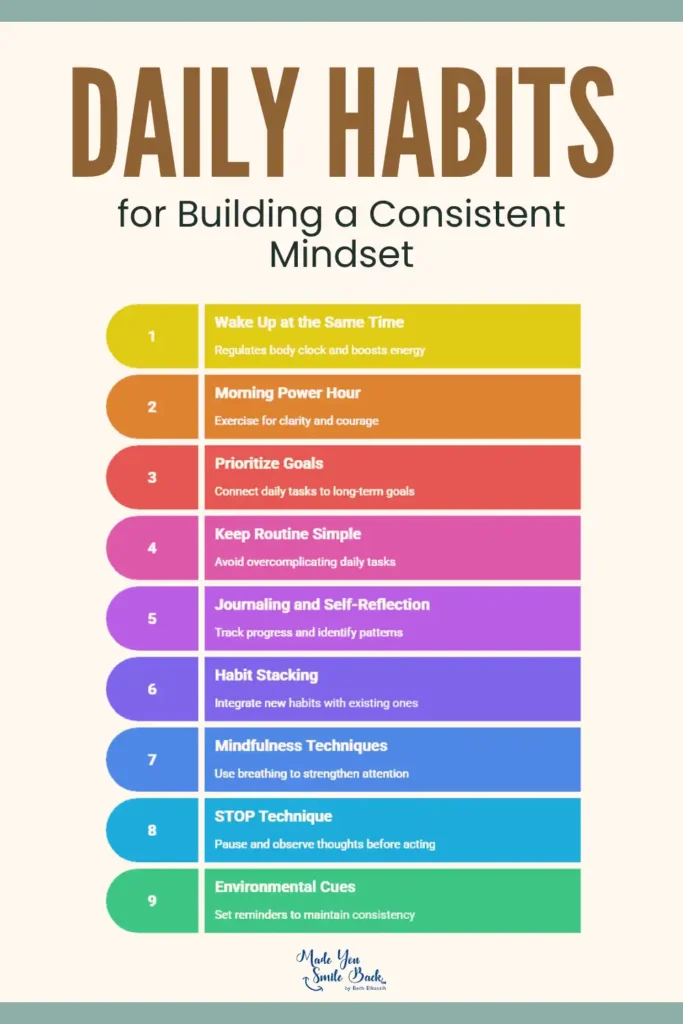
Daily Habits for Building a Consistent Mindset
Building a consistent mindset is all about those daily actions that line up with your goals. These habits lay the groundwork for lasting change, even when life gets messy.
Morning Routines to Maintain Focus
How you start your day matters. Waking up at the same time every day helps regulate your body’s internal clock and gives you a little energy boost.
Try a morning power hour—even if it’s just a quick stretch. Exercise brings clarity and a bit of courage to face the day.
Before you check your phone, write down your top three priorities. Connect them to your big-picture goals. This way, you’re less likely to get sidetracked.
Keep your routine simple. Overcomplicating things is a recipe for inconsistency, especially when life gets busy.
Journaling and Self-Reflection
Journaling for a few minutes each night helps you spot patterns and track progress. What went well? What could’ve gone better?
Some good reflection questions to try:
- What did I actually get done today?
- Where did I slip up with consistency?
- What’s one thing I could tweak for tomorrow?
Changing your identity is more powerful than just changing your actions. Write affirmations about who you’re becoming, not just what you’re doing.
Try habit stacking: tack a new habit onto something you already do, like journaling right after brushing your teeth.
Mindfulness Techniques
Mindfulness helps you catch yourself when you start slipping into old patterns. Just five minutes of focused breathing a day can strengthen your attention.
The STOP technique is handy:
- S: Stop what you’re doing
- T: Take a breath
- O: Observe your thoughts and feelings
- P: Proceed with intention
Treat your habits as the backbone of your life, not just extras. This shift in thinking makes it easier to prioritize consistency, even when motivation is low.
Set up environmental cues to remind yourself. Leave your meditation cushion where you’ll see it, set phone reminders, or stick up notes with little pep talks.

Save what you love, hover or tap the image and pin it now.
The Connection Between Fitness and Mindset
Physical activity and your mindset are more connected than you might think. When you work out regularly, you’re not just building muscle—you’re training your mind to be more consistent, too.
Impact of Exercise on Mental Fortitude
Exercise releases endorphins that lift your mood and lower stress. That chemical boost helps you stay positive, even when things get rough.
When you exercise mindfully, you build mental toughness that sticks with you outside the gym.
Research says physical activity sharpens your focus and thinking. That clarity makes it easier to make better choices and stick to your goals.
The discipline it takes to keep a fitness routine spills over into other parts of your life. Every time you work out, even when you’re tired, you’re flexing your willpower.
Some mental perks of regular exercise:
- Less anxiety and depression
- More self-confidence
- Better at handling stress
- Improved emotional balance
How Workouts Support Consistency
Starting with small, manageable workouts builds momentum. When you hit these smaller fitness goals, you start to trust yourself to keep showing up, not just in fitness but in other stuff too.
Fitness routines carve out some structure in your day. Over time, your brain starts expecting those habits, so sticking to them feels a bit more natural and less like a chore.
Physical activity tends to boost your energy. With more energy, you’re less likely to skip out on important things just because you’re tired, which helps you stay on track.
Exercising gets easier the more you do it. That same logic applies to consistency—the more you practice it, the less effort it takes.
Practical ways workouts build consistency:
- Creating achievable daily targets
- Developing discipline through regular practice
- Building resilience through physical challenges
- Establishing positive feedback loops
Save what you love, hover or tap the image and pin it now.
Overcoming Obstacles to Consistency
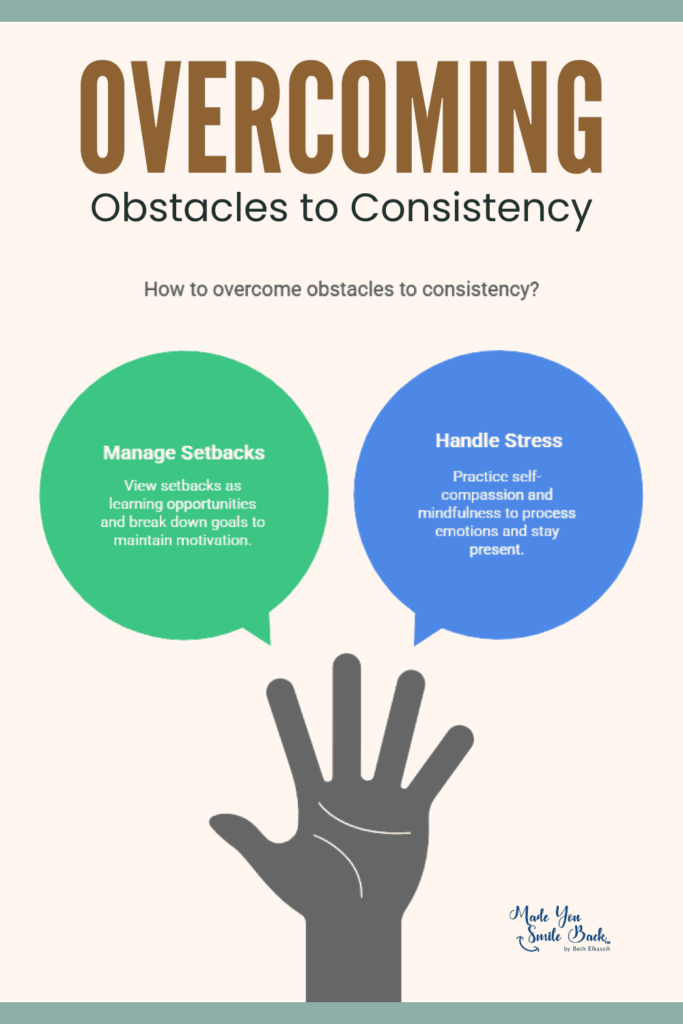
Consistency has its fair share of hurdles, but with a few decent strategies, you can get through the rough patches. It really comes down to handling setbacks and dealing with negative emotions in a healthy way.
Managing Setbacks and Staying Motivated
Setbacks are just part of the deal when you’re trying to be consistent. If you mess up, try to see it as a chance to learn instead of a reason to give up.
Honestly, consistency isn’t all or nothing. What matters is what you do most of the time, not every single time.
Break big goals down into smaller chunks. That way, you see progress faster, which keeps your motivation alive. The Pomodoro technique can help—work for 25 minutes, then take a short break.
Practical motivation strategies:
- Track your progress visually
- Celebrate small wins
- Find an accountability partner
- Set meaningful rewards for milestones
When your motivation fizzles out, try to remember your “why”—the deeper reason you started all this in the first place.
Handling Stress and Negative Emotions
Stress and tough emotions can throw consistency right off course. Negative self-talk is sneaky and can make you doubt yourself.
Try to notice what you’re telling yourself. If you catch your brain saying things like “I can’t do this,” push back with reminders of when you actually did handle tough stuff.
Create a resilience routine to help you process emotions:
- Acknowledge what you’re feeling (no judgment)
- Practice self-compassion
- Use mindfulness to stay present
- Reset with a quick burst of movement
Consistency doesn’t mean perfection. The goal isn’t to nail it every single time, but to keep going even when things get messy.

Save what you love, hover or tap the image and pin it now.
Long-Term Strategies for a Consistent Mindset
Building a consistent mindset takes time, and you’ll need some strategies that actually last. Tracking your progress and having solid support makes it way easier to stick with things when your initial excitement disappears.
Tracking Progress and Adapting Approaches
Tracking helps you stay accountable and spot patterns. Start with a basic habit tracker—could be a notebook, could be an app, whatever works for you.
Don’t just track what you do—track how you feel. Notice when you hit resistance and what tends to throw you off. That kind of self-awareness helps you get clear about what you’re really aiming for.
If your plan isn’t working, tweak it. You don’t need to overhaul everything—sometimes small shifts make the biggest difference.
Weekly review process:
- What worked this week?
- What challenges popped up?
- How can I adjust things?
- What’s one small win I can celebrate?
Focusing on consistency instead of just results leads to real, lasting progress. Your health—mental and physical—gets a boost from this steady approach.
Building Support Systems
Nobody gets consistent alone. Schedule what you can actually handle and get others involved to keep yourself honest.
Find an accountability partner with similar goals. Even a quick weekly check-in can keep you moving when you’d otherwise slack off.
Shape your environment to make good habits easier and bad ones harder. Sometimes it’s about removing friction, sometimes it’s about adding a little roadblock between you and your worst habits.
Support system checklist:
- Accountability partner or group
- Organized physical space
- Digital tools that reinforce habits
- Clear boundaries with people who undermine goals
Keep your “why” in sight. Remind yourself daily why you’re trying to be consistent in the first place.
Your support system should cover health basics too. Sleep, food, and stress management are the foundation—without those, even the best plans fall apart.

Save what you love, hover or tap the image and pin it now.
Frequently Asked Questions
Consistency is a mix of mental strategies and practical habits. These questions get into the weeds of what trips people up when they’re trying to stick with something for the long haul.
What are effective strategies for maintaining consistency with personal goals?
Set clear, specific goals that you actually care about. Write them down and look at them every day—it sounds simple, but it keeps your mind focused.
Break big goals into smaller steps you can actually do often. That way, you rack up small wins, and those add up fast.
Track your progress with a journal, app, or even a wall calendar. Consistency isn’t about perfection; it’s about showing up, again and again.
How can I develop a consistent daily routine that sticks?
Start with just one or two core habits instead of trying to change everything overnight. Most people find that starting with one thing makes the next step easier.
Try habit stacking—attach a new behavior to something you already do. For example, after brushing your teeth, read for five minutes to build a reading habit.
Make your routine fit your natural energy and preferences. There’s no one-size-fits-all—find what works for you.
What are the keys to fostering consistency within relationships?
Set clear expectations and boundaries with people close to you. When everyone’s on the same page, it’s easier to keep things consistent.
Be reliable—respond to messages, keep promises, and follow through. Those small, dependable actions build trust over time.
Remember, relationships change, but your core values can stay the same. Consistency doesn’t mean being rigid; it means showing up as yourself, again and again.
What techniques assist in sustaining a regular exercise routine over time?
Pick activities you actually like—not just what you think you “should” do. If you enjoy it, you’ll stick with it way longer.
Try to work out at the same time on certain days. Your brain will start to expect it, making it less of a struggle to get started.
Having an accountability partner or being part of a group helps a ton. Social pressure isn’t always bad—it can keep you showing up.
Which methods can help improve consistency in academic pursuits?
Set up a specific spot just for studying. Over time, your brain will get the message that it’s time to focus when you’re there.
Use spaced repetition to review material at intervals that actually help you remember. Regular, spaced practice beats last-minute cramming every time.
Set clear learning goals for each session. “Study biology” is vague—“review chapter three vocab” is way more actionable.
What are the principles behind nurturing a self-consistent attitude?
Notice that a lot of inconsistency comes from outside influences. Figure out which thoughts are really yours, and which you’ve picked up from others.
Practice mindfulness so you can spot when your thinking swings wildly. That awareness is the first step to keeping your mindset steady.
Come up with a few personal mantras or principles to guide you when things get tough. They can help anchor you when life gets chaotic.
Save what you love, hover or tap the image and pin it now.
In Conclusion – Final Last Words
Building a consistent mindset doesn’t happen overnight. It takes practice—sometimes a lot of it, honestly.
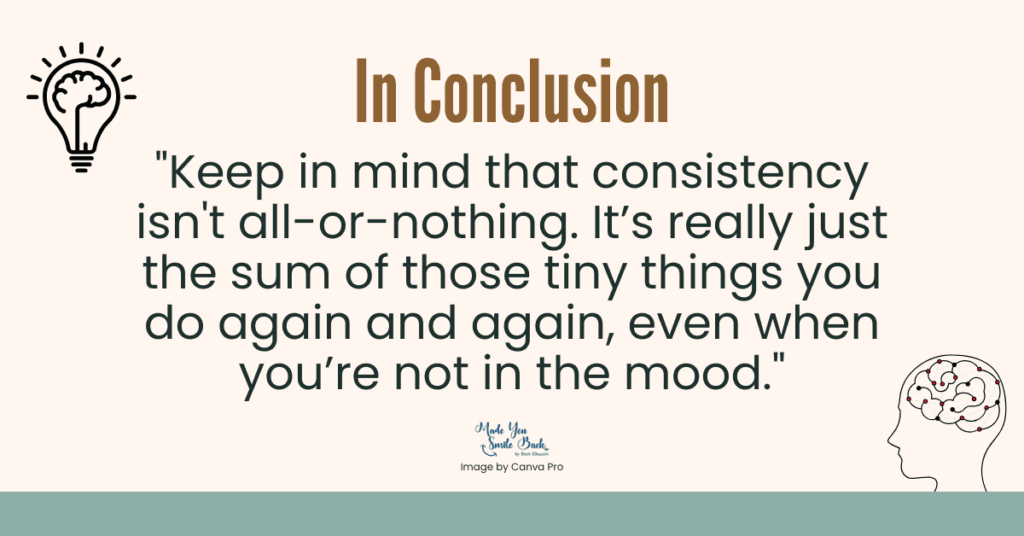
Keep in mind that consistency isn’t all-or-nothing. It’s really just the sum of those tiny things you do again and again, even when you’re not in the mood.
Start with just 1 or 2 goals. Trying to overhaul your entire routine at once? That’s a recipe for burnout, if you ask me.
Small wins build confidence. When you see yourself following through on manageable tasks, it actually feels doable.
Make your important habits non-negotiable. If you draw a line in the sand and say, “Nope, this is happening,” you save yourself a lot of mental back-and-forth.
Set clear boundaries for yourself. The less you debate with yourself, the easier it gets, weirdly enough.
Track your progress—visually, if you can. There’s something about seeing those checkmarks or that chain of X’s that keeps you going when motivation dips.
Connect your habits to what actually matters to you. If you don’t know why you want to be consistent, it’s tough to keep caring when things get hard.
Setbacks? Yeah, they’re going to happen. If you’ve got a plan for when things go sideways, you’ll bounce back faster.
Honestly, developing consistency is kind of a mix—motivation, knowing yourself, setting realistic goals, and just plain stubbornness sometimes. Give yourself a break as you figure it out.