Why Great Things Take Time
🕒 Last Updated on June 4, 2026
Why Great Things Take Time: The Unstoppable Power of Patient Progress
We live in a world obsessed with speed — instant results, overnight success, and viral moments that make it seem like greatness arrives in a flash.

But the truth that history, science, and human experience keep confirming is this: great things take time, and the people who truly understand this rise above the rest.
This blog post dives deep into why slowing down is actually the fastest path to lasting success, meaning, and fulfillment.
The Myth of Overnight Success

Save what you love, hover or tap the image and pin it now.
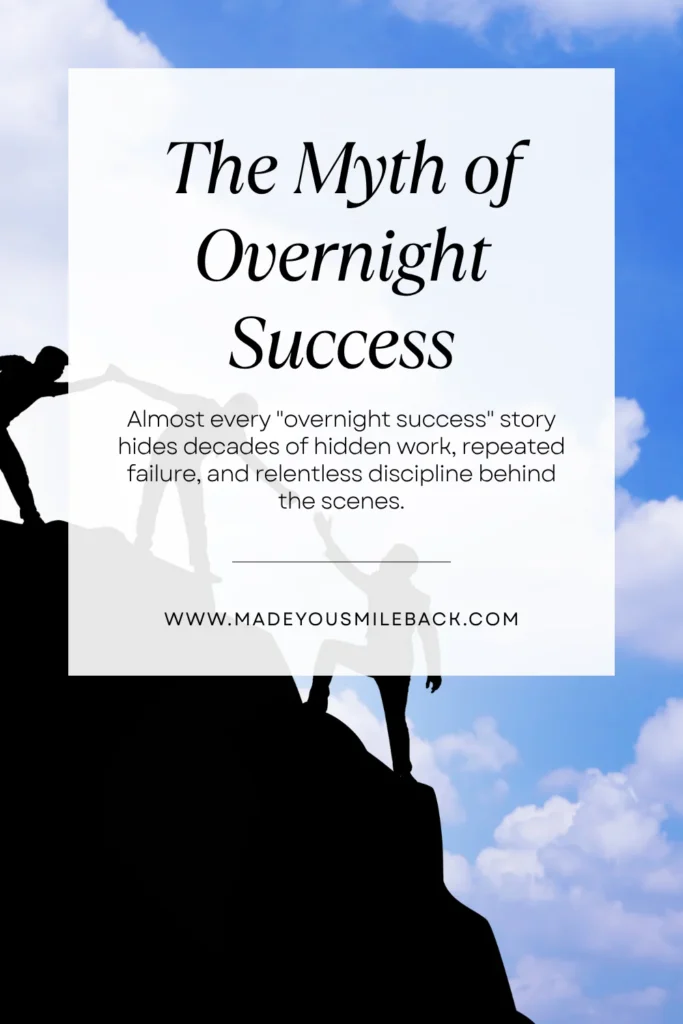
Almost every “overnight success” story hides decades of hidden work, repeated failure, and relentless discipline behind the scenes. The headlines show the breakthrough — they never show the ten thousand hours that preceded it.
When we compare our beginning to someone else’s middle, we set ourselves up for unnecessary discouragement. The myth of overnight success is perhaps the most damaging lie ever told to ambitious people.
Why Overnight Success Is a Dangerous Illusion:
- Survivorship bias skews our perception — we only hear about the winners, never the thousands who quietly persisted
- Social media highlight reels compress years of effort into a single viral post
- News cycles reward novelty, making breakthroughs look sudden even when they aren’t
- Our brains crave simple narratives, so we strip out the messy, boring middle of every success story
- Comparison culture makes us feel behind when we’re actually exactly where we need to be
The Hidden Timeline of Famous Successes:
- J.K. Rowling was rejected by 12 publishers before Harry Potter was accepted — the series then sold 500 million copies
- Colonel Harland Sanders was 65 years old when KFC franchise success finally arrived after years of rejection
- Vera Wang didn’t design her first dress until she was 40 — she became one of fashion’s most iconic names
- Charles Darwin spent 20+ years gathering evidence before publishing On the Origin of Species
- The Wright Brothers failed hundreds of times across years of experimentation before achieving 12 seconds of flight at Kitty Hawk
What Science Says About Patience and Long-Term Success
Save what you love, hover or tap the image and pin it now.
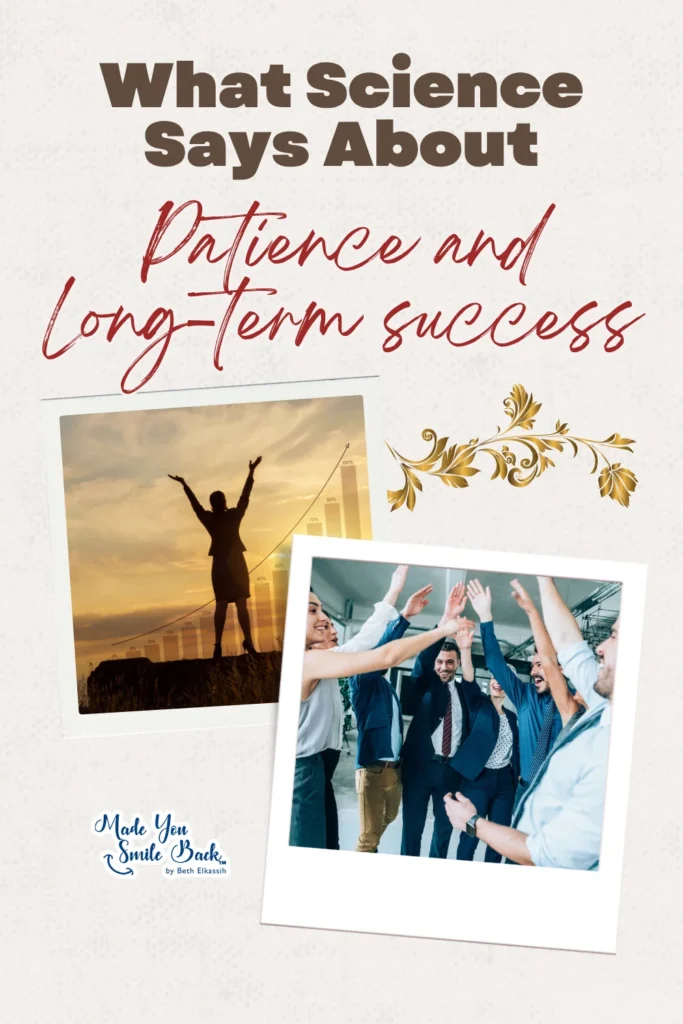
The research is unmistakable: individuals and organizations that prioritize long-term thinking consistently outperform those chasing short-term wins. This isn’t opinion — it’s a pattern backed by decades of behavioral science.
The ability to delay gratification, as famously studied in the Stanford Marshmallow Experiment, correlates strongly with higher academic achievement, better health outcomes, and greater career success over a lifetime.
Key Scientific Findings on Patience and Achievement:
- Neuroplasticity research shows that mastery literally rewires the brain — and this process cannot be rushed without sacrificing depth
- Deliberate practice studies by Dr. Anders Ericsson confirm that expertise requires roughly 10,000 hours of focused, intentional effort
- The compound effect, a principle in both finance and behavior, proves that small, consistent actions yield exponentially greater results over time
- Longitudinal studies on grit, led by Dr. Angela Duckworth, demonstrate that perseverance over time predicts success more reliably than raw talent
- Harvard Business School research found that companies focused on long-term value creation outperformed short-term focused peers by 47% in revenue growth over a 15-year period
What Patience Activates in the Brain:
- Strengthened prefrontal cortex function — the region responsible for planning and decision-making
- Reduced cortisol (stress hormone) levels associated with reactive, impulsive decision-making
- Increased dopamine regulation, creating a healthier reward cycle tied to progress rather than instant outcomes
- Enhanced capacity for what psychologists call “future self-continuity” — your ability to care about your future self
- Deeper encoding of learned skills into long-term memory through spaced repetition over time
Nature’s Greatest Reminder: Great Things Take Time

Save what you love, hover or tap the image and pin it now.
Nature has never been in a hurry, and yet it has produced the tallest mountains, the deepest oceans, the most complex ecosystems, and the most extraordinary creatures on Earth. If you need a reminder that great things take time, look outside.
Get your Freebie

The oak tree doesn’t apologize for starting as an acorn. It simply does the work, season after season, until it becomes something extraordinary.
Nature’s Most Powerful Lessons in Patient Progress:
- Diamond formation requires carbon to endure extreme pressure and heat for over a billion years beneath the Earth’s surface
- Coral reefs — among the most biodiverse ecosystems on the planet — grow only 1–3 centimeters per year
- The Grand Canyon was carved by the Colorado River over approximately 5–6 million years of relentless, patient erosion
- Sequoia trees, the largest living organisms on Earth by volume, take 200 years just to reach full maturity
- Stalactites grow roughly one cubic inch every 100+ years — silent monuments to the power of slow, steady accumulation
Analogies That Will Shift Your Perspective:
- A seed doesn’t burst through soil in a day — it spends weeks building roots you’ll never see before reaching upward
- The caterpillar doesn’t rush the metamorphosis inside the chrysalis; it surrenders to the process completely
- Seasons don’t overlap — winter doesn’t apologize for coming before spring, and neither should your slow season
- A river doesn’t force its way through rock in a moment; it chooses the patient path and eventually moves mountains
- Tides don’t reshape coastlines with one dramatic wave — they show up every single day for thousands of years
The Relationship Between Patience and Mastery

Save what you love, hover or tap the image and pin it now.
Every master of every craft has one thing in common — they refused to rush the process. Whether you’re studying martial arts, learning a language, building a company, or developing a creative skill, mastery demands a long, loving commitment to the journey.

Rushing mastery doesn’t accelerate it — it undermines it. The shortcut mentality is actually the longest route to genuine skill.
What Mastery Actually Requires:
- Volume of repetition — doing the same thing thousands of times until excellence becomes instinctive and automatic
- Failure tolerance — masters fail more than beginners because they attempt harder things more frequently
- Feedback loops — consistent refinement through honest assessment of what’s working and what isn’t
- Depth over breadth — going impossibly deep into one area before expanding horizontally
- Time in the dark — the frustrating middle stage where progress is invisible but still very much happening
Disciplines Where Time Is Non-Negotiable:
- Medicine — becoming a skilled surgeon takes 12–15 years of education, residency, and supervised practice
- Music — concert-level pianists typically accumulate 10,000–20,000 practice hours before performing professionally
- Martial arts — earning a black belt in Judo or Brazilian Jiu-Jitsu typically requires 8–12 years of consistent training
- Winemaking — a Grand Cru Bordeaux may require 10–25 years of aging before reaching its peak expression
- Language acquisition — achieving true fluency in a second language requires 2–10 years of immersive exposure and study
How to Develop the Mindset That Great Things Take Time
Save what you love, hover or tap the image and pin it now.
Understanding that great things take time is one thing — internalizing it as a lived philosophy is another. The mindset shift from urgency to patient trust is one of the most powerful transformations you can make.
It begins with a fundamental reframe: stop measuring success by speed and start measuring it by direction.

Mindset Shifts That Unlock Patient Progress:
- Replace “How fast?” with “How consistent?” — frequency and reliability matter far more than speed of early results
- Celebrate small wins loudly — acknowledging micro-progress reinforces the neural pathways that keep you showing up
- Detach from timelines, attach to systems — focus on the daily habits and processes, not the arbitrary deadlines you’ve assigned
- Embrace the plateau — flat periods in growth are not failure; they are consolidation phases where foundations are being cemented
- Trust the invisible work — roots grow before flowers bloom, and the unseen effort always precedes the visible result
Daily Practices to Cultivate Patient Ambition:
- Begin a “Progress Journal” where you log even the smallest daily movement toward your goal
- Set process goals (e.g., “I will write for 30 minutes daily”) rather than outcome goals (e.g., “I will finish the book by March”)
- Study the biographies of masters in your field — let their timelines normalize your own journey’s length
- Practice deliberate reflection weekly, reviewing how far you’ve come rather than fixating on how far you have to go
- Build accountability structures — coaches, mentors, or partners who can see your progress objectively when you can’t
Great Things Take Time in Relationships and Personal Growth
Save what you love, hover or tap the image and pin it now.
Perhaps nowhere is the wisdom that great things take time more relevant — or more frequently ignored — than in human relationships and personal development. We want deep friendships instantly, loving partnerships without the slow-building of trust, and transformation without enduring the discomfort of change.
But character is carved by years of choices, and connection is built through accumulated moments of showing up.
Why Meaningful Relationships Require Time:
- Trust is not declared — it is earned through consistent behavior repeated across hundreds of interactions over months and years
- Intimacy deepens in layers, and each layer can only be revealed when the relationship has built enough safety to hold it
- Conflict and repair cycles are the actual forge of strong bonds — these take time to experience and learn from together
- Shared history creates irreplaceable depth — the inside jokes, the memories, the shorthand language of closeness cannot be manufactured quickly
- Vulnerability requires patience — people open up fully only after feeling reliably safe, and that safety is never instant
Personal Growth Truths You Need to Hear:
- Healing is not linear — it spirals, stalls, and surges in rhythms you can’t control or predict
- Emotional maturity is developed across decades of self-examination, mistakes, and conscious course correction
- A meaningful life is assembled piece by piece, choice by choice, year after year — not designed in a weekend
- Changing a single deeply held belief can take years of gentle, repeated challenge and exposure to new evidence
- The person you are becoming is being built right now, in the quiet decisions nobody else sees
Business and Career Success: Why Great Things Take Time
Save what you love, hover or tap the image and pin it now.
In the startup world, “move fast and break things” became a rallying cry — but the most enduring companies were never built that way. Amazon took nearly a decade to turn a profit. Apple nearly collapsed before its renaissance. The businesses built to last are built slowly, deliberately, and with an unwavering commitment to long-term value.
Career success follows the same pattern — the professionals who compound their skills, relationships, and reputation over years eventually become untouchable in their fields.
Why Sustainable Business Success Is Slow:
- Brand trust is accumulated, not purchased — customers need repeated positive experiences before they become loyal advocates
- Organizational culture takes years to develop and can be destroyed in weeks — it demands constant, patient cultivation
- Product-market fit often requires numerous pivots, user interviews, and redesigns across months or years before clicking into place
- Great teams are assembled, developed, and aligned through years of intentional leadership and honest feedback
- Sustainable revenue models are tested, refined, and stress-tested through economic cycles that can span years
Career Milestones That Demand a Long-Term View:
- Building a professional reputation — industry recognition typically takes 5–10 years of consistent, excellent work and visible contribution
- Developing a deep professional network — genuine relationships that open doors are cultivated across years of mutual generosity
- Reaching executive leadership — the average age of Fortune 500 CEOs is 57, reflecting decades of layered experience
- Achieving financial independence — most successful wealth-building strategies require 20–30 years of disciplined, compounding growth
- Becoming a recognized expert or thought leader — this requires thousands of hours of learning, publishing, and public contribution over years
Practical Strategies for Embracing the Long Game
Save what you love, hover or tap the image and pin it now.
Knowing that great things take time is wisdom. Actually living that truth in a world of instant notifications, 24-hour delivery, and social media dopamine loops requires concrete strategy. Here’s how to make the long game your competitive advantage.
The people who master patience don’t just wait passively — they learn to act consistently, trust deeply, and measure wisely.
Systems for Playing the Long Game:
- Design your environment for patience — remove friction from your most important long-term habits and add friction to impulsive short-term distractions
- Establish a personal “North Star” metric — one meaningful indicator of long-term progress that you track weekly, ignoring all the noise
- Schedule quarterly reviews of your long-term goals to course-correct without abandoning the journey entirely
- Create a “slow success” gallery — a physical or digital space where you document evidence of your incremental growth over time
- Surround yourself with patient people — the mindset of your closest circle directly shapes your own relationship with time and progress
Anti-Patterns to Eliminate From Your Life:
- Shiny object syndrome — abandoning strategies before they’ve had enough time to compound and produce results
- Constant goal-switching — changing direction every few months ensures you never go deep enough to reach mastery in anything
- Comparing your Chapter 3 to someone else’s Chapter 30 — timeline comparison is almost always apples-to-oranges and universally destructive
- Measuring daily instead of monthly — zooming in too close on short timeframes makes normal fluctuations look like failure
- Quitting during the “dip” — Seth Godin’s concept of the Dip describes the hardest part just before a breakthrough, where most people wrongly abandon their efforts
In Conclusion – Final Last Words
The world will always try to rush you. Algorithms reward virality. Culture celebrates speed. Comparison makes you feel perpetually behind. But the most profound, beautiful, and lasting things ever created — in nature, in art, in science, in relationships, and in human character — all share one irrefutable truth: great things take time.
The oak tree doesn’t envy the mushroom for growing overnight. It simply grows.
Your journey is not broken because it is slow. It is not failing because results are not yet visible. The roots you’re building right now, in the quiet, unseen, unglamorous daily effort — they are the very foundation that will one day hold something extraordinary. Every small action you take compounds. Every skill you develop deepens. Every relationship you tend grows richer.
Patience is not passive waiting. It is active, faithful, disciplined trust in the process — a radical act in a world addicted to the immediate.
The Core Truths to Carry Forward:
- Great things take time — and that is not a limitation; it is the source of their greatness
- Consistency beats intensity — showing up small every day beats heroic bursts followed by long absences
- Your timeline is not a failure — it is the architecture of something real and durable
- The work you do in obscurity matters most — it is building the foundation nobody sees but everyone eventually stands on
- You are not behind — you are exactly where the next chapter of your story begins
Your Call to Action — Start Here, Start Now:
- Write down your single most important long-term goal — and commit to it for the next 12 months without abandoning it
- Identify one daily action — small enough to do on your worst day — that moves you toward that goal
- Find one person who is playing the long game in your field and study their journey closely
- Delete one short-term distraction from your life this week and replace it with a long-term investment in your future self
- Say this out loud: “I trust the process. I am building something great. Great things take time — and I have the time.”
The world needs what only patient, persistent, long-game thinkers can create. Don’t rob it of your best work by rushing to finish before you’ve truly begun.
“Great things take time. Give yours the time it deserves.”