Coloring Books and Anxiety: How Creative Activities Promote Mental Wellness
🕒 Last Updated on January 23, 2026
Coloring books aren’t just for kids anymore. Adults are picking up colored pencils and markers to help manage their stress and anxiety.
Coloring activates both sides of your brain, calms your nervous system, and helps you focus on the present moment, which can reduce anxious thoughts.
You might wonder how something so simple can make a real difference. The act of coloring gives your mind a break from worry and rumination.
It creates a calm space where you can relax without needing special skills or training.
This article will help you understand why coloring works for anxiety relief and how to use it effectively.
You’ll learn about the science behind this activity, what types of coloring books work best, and how to make coloring part of your anxiety management plan.
How Coloring Books Relate to Anxiety

Save what you love, hover or tap the image and pin it now.
Coloring books affect anxiety through specific brain processes and provide a structured way to engage your mind.
These tools have gained attention for their ability to reduce stress responses and promote calm states.
Understanding Anxiety and Its Impact
Anxiety affects millions of people through persistent worry, racing thoughts, and physical symptoms like rapid heartbeat or tension.
Get your Freebie


Your brain’s amygdala acts as a fear center, triggering stress responses even when no real danger exists.
When you experience anxiety, your prefrontal cortex struggles to maintain focus and rational thinking.
This creates a cycle where worries feed on themselves and become harder to control.
Generalized anxiety disorder causes excessive fretting over everyday concerns.
Other forms include social anxiety, panic disorder, and PTSD.

Each type affects your daily life differently but shares common features like rumination and difficulty relaxing.
The physical effects of anxiety include:
- Muscle tension and headaches
- Sleep problems
- Difficulty concentrating
- Fatigue and irritability
- Digestive issues
Why Coloring Books Are Popular for Anxiety
Adult coloring books became widely available in recent years as people searched for accessible stress relief methods.
You don’t need artistic skills or expensive materials to start coloring.
The activity provides structure through pre-drawn patterns and boundaries.
This removes the pressure of creating something from scratch while still engaging your creative side.
Your focus shifts from anxious thoughts to the immediate task of choosing colors and staying within lines.
Coloring offers a portable and affordable option compared to other anxiety management tools.
You can color at home, during breaks at work, or while traveling.
The low barrier to entry makes it easy to try without major commitment.
Scientific Insights into Coloring and Anxiety
Research shows coloring activates your prefrontal cortex, the brain region responsible for concentration and decision-making.
This engagement helps quiet the amygdala and reduces your stress response.
A study published in the Journal of Health Education Teaching found that structured coloring activities, particularly geometric patterns, decrease anxiety levels and increase mindfulness.
Mandala coloring specifically has shown benefits for reducing PTSD symptoms and general anxiety.
The activity creates what researchers call a relaxation response in your body.
Your heart rate may slow, breathing becomes deeper, and muscle tension decreases.
These physical changes signal safety to your nervous system.
Coloring functions as a form of mindfulness practice.
You focus attention on present-moment sensations like the feel of the pencil and the colors you’re choosing.
This redirects mental energy away from worry and rumination about past or future events.
The Psychological Benefits of Coloring for Anxiety
Save what you love, hover or tap the image and pin it now.
Coloring offers several mental health advantages that can help manage anxiety symptoms.
These benefits range from lowering stress hormones in your body to creating space for emotional expression and building better focus.
Relaxation and Stress Reduction
When you color, your body enters a relaxed state similar to meditation.
This activity calms your brain and helps reduce cortisol, the hormone your body produces when you feel stressed.
Your heart rate slows down during coloring sessions.
Your breathing becomes more regular and calm.
These physical changes signal to your nervous system that you are safe, which helps reduce feelings of anxiety.
Research has shown that coloring can decrease symptoms of stress and anxiety in adults.
The repetitive motions and focus required create a calming effect that extends beyond the coloring session itself.
Many people notice improvements in sleep quality and fewer body aches after regular coloring practice.
Emotional Well-Being and Self-Compassion
Coloring creates a judgment-free space where you can process emotions without pressure.
Unlike many daily tasks, there is no right or wrong way to fill in a design with color.
This freedom helps you practice self-compassion.
You can make choices based on what feels good rather than what seems perfect.
The activity gives you permission to focus on yourself without guilt.
Your emotional well-being improves when you have healthy outlets for stress.
Coloring provides a safe way to take breaks from difficult thoughts and feelings.
It offers a gentle form of self-care that requires minimal energy or planning.
Creativity and Self-Expression
You express yourself through color choices and shading techniques.
Each page becomes a reflection of your mood, preferences, or current emotional state.
This creative outlet doesn’t require artistic training or special skills.
You can start immediately with just a coloring book and basic supplies.
The structured nature of pre-drawn designs removes the pressure of creating something from scratch.
Your creativity develops naturally as you experiment with different color combinations.
This process can boost confidence and provide a sense of accomplishment.
These positive feelings counter the negative thought patterns that often accompany anxiety.
Improved Focus and Mindfulness
Coloring encourages a state of flow where you become fully absorbed in the present moment.
This focused attention is a form of mindfulness that redirects your thoughts away from worries.
You concentrate on staying within lines, choosing colors, and creating patterns.
These simple tasks occupy your mind in a productive way.
This mental engagement blocks out anxious thoughts that might otherwise dominate your attention.
The practice strengthens your ability to focus on one task at a time.
You train your brain to notice when it wanders and gently bring it back to the activity.
This skill transfers to other areas of your life and supports better mental well-being overall.
The Role of Mindfulness and Meditative Experience
Save what you love, hover or tap the image and pin it now.
Coloring activities can create mindfulness states similar to traditional meditation practices.
Research shows that when you combine coloring with specific mindfulness techniques, you may experience greater anxiety reduction than coloring alone.
Mindfulness Practice with Coloring
Mindfulness practice involves focusing your attention on the present moment without judgment.
When you color mindfully, you pay attention to the physical sensations of holding the pencil, the colors you choose, and the movements of your hand.
Studies show that people who received mindfulness instructions before coloring reported less anxiety and better focus afterward.
Those who colored without mindfulness guidance did not experience the same benefits.
This suggests that how you approach coloring matters as much as the activity itself.
You can practice mindfulness while coloring by noticing when your mind wanders and gently bringing your attention back to the coloring.
Focus on the texture of the paper, the sound of the pencil, and the colors in front of you.
Meditative States and Coloring
Coloring can help you enter meditative states that feel similar to traditional meditation.
Many people find coloring more accessible than sitting meditation because it gives your hands something to do while your mind settles.
The repetitive motions and focus required for coloring naturally quiet mental chatter.
Your brain shifts into a calmer mode as you concentrate on staying within the lines and choosing colors.
This creates the same type of focused awareness that meditation produces.
Research indicates that coloring mandalas, which are circular geometric patterns, may be especially effective for reducing anxiety.
The symmetrical designs help guide your attention and create a natural focal point for meditative concentration.
Mindfulness Meditation Versus Art Activities
Mindfulness meditation and coloring both reduce anxiety, but they work in slightly different ways.
Traditional meditation asks you to sit still and observe your thoughts.
Coloring gives you a visual and physical task to anchor your attention.
Some research suggests that mindful coloring works just as well as meditation for lowering anxiety levels.
The key difference is that coloring provides a concrete activity, which some people find easier to stick with than meditation.
You don’t need previous meditation experience to benefit from coloring.
However, if you already practice mindfulness meditation, applying those skills to coloring may enhance the anxiety-reducing effects.
Coloring Book Themes for Anxiety Relief
Save what you love, hover or tap the image and pin it now.
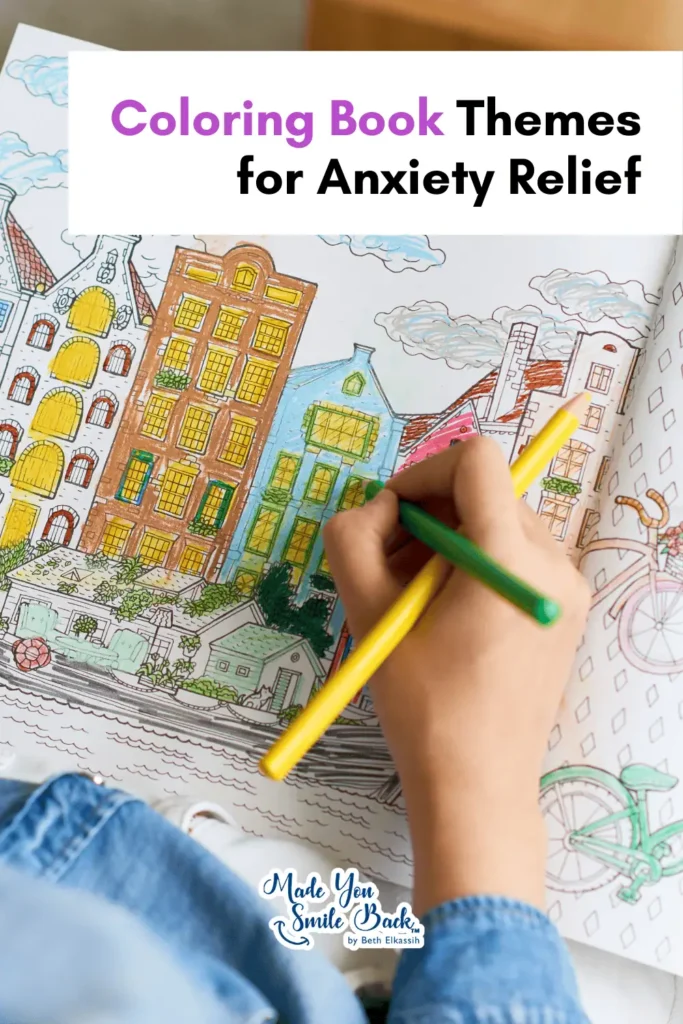
Different coloring book themes offer unique ways to reduce stress and calm your mind.
The patterns and images you choose can affect how relaxed you feel while coloring.
Mandalas and Geometric Patterns
Mandalas are circular designs that start from a center point and expand outward in repeating patterns.
When you color mandalas, you focus on one small section at a time, which helps quiet anxious thoughts.
The symmetrical nature of these designs creates a sense of order and balance.
Geometric patterns in adult coloring books include shapes like triangles, squares, and hexagons arranged in intricate designs.
These patterns work well for anxiety relief because they require concentration without being overwhelming.
You can choose simple geometric designs when you need gentle distraction or complex ones when you want deeper focus.
Coloring mandalas and geometric patterns activates the part of your brain that controls organization and structure.
This mental shift away from worry helps reduce anxiety naturally.
Many adult coloring books feature both simple and detailed mandala designs so you can match the complexity to your current stress level.
Nature and Animal Designs
Nature scenes like forests, gardens, and ocean views bring a sense of calm to your coloring practice.
These themes connect you to peaceful outdoor settings even when you’re inside.
Trees, flowers, and landscapes offer varied shapes and textures to color.
Animal designs range from realistic wildlife to whimsical creatures.
Birds, butterflies, and marine life are common choices in coloring books for adults focused on anxiety relief.
These subjects provide organic shapes that feel less structured than geometric patterns.
Nature and animal themes work well because they remind you of relaxing environments.
You can imagine the sounds and smells of a garden while filling in flower petals or picture a quiet forest while coloring tree bark.
Affirmation and Inspirational Coloring Books
These adult coloring books combine positive phrases with decorative borders and patterns.
You color words like “breathe,” “peace,” or “I am enough” along with surrounding designs.
The combination of reading uplifting messages and coloring creates two calming activities at once.
Affirmation pages often feature hand-lettered text integrated into floral or abstract backgrounds.
As you color each letter and design element, you absorb the positive message repeatedly.
This repetition helps replace negative thought patterns with more supportive ones.
Inspirational quotes paired with coloring designs give you something meaningful to focus on during anxious moments.
You can display your finished pages as visual reminders of calm and strength.
Practical Tips for Using Coloring Books to Manage Anxiety
Save what you love, hover or tap the image and pin it now.
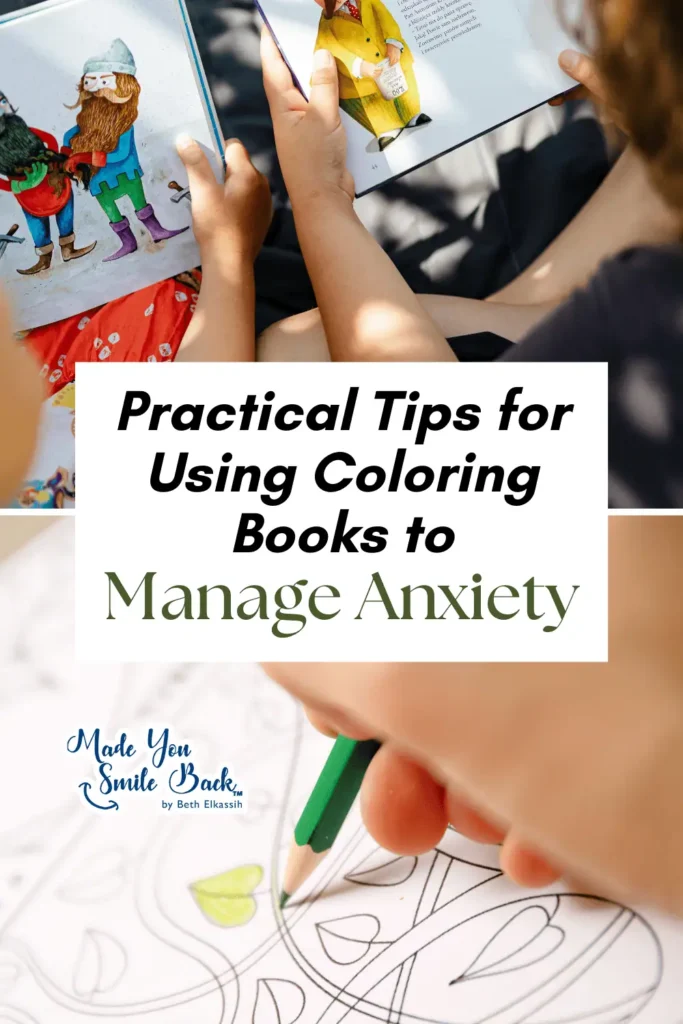
The right materials, environment, and daily habits can make coloring a more effective tool for managing anxiety.
These practical strategies help you get the most mental health benefits from your coloring practice.
Choosing the Right Materials
Start with coloring books that match your skill level and interests. Beginners often do better with simpler designs that have larger spaces to fill.
More experienced colorists might prefer detailed mandalas or intricate patterns.
Colored pencils offer the most control and allow for detailed shading work. They don’t bleed through paper and work well for people who like precision.
Crayons provide a nostalgic experience and require less focus on technique. Gel pens and markers create bold, vibrant results but may bleed through thin paper.
Choose materials that feel comfortable in your hands. Some people find that the tactile experience of holding quality colored pencils reduces tension.
Others prefer the smooth glide of crayons across the page.
Test different paper types to find what works best. Thicker paper prevents bleeding and feels more substantial.
Some coloring books feature perforated pages you can remove and display.
Setting Up a Relaxing Environment
Find a quiet space where you won’t be interrupted for at least 15-20 minutes. This could be a corner of your bedroom, a comfortable chair, or even outside on nice days.
Good lighting prevents eye strain and helps you see colors clearly. Natural light works best, but a bright lamp also works well for evening coloring sessions.
Keep your coloring supplies organized in a basket or box. Having everything within reach prevents frustration and helps you start quickly when anxiety rises.
Some people find that soft background music or nature sounds enhance relaxation. Others prefer complete silence.
Try both approaches to see what helps you focus.
Remove digital distractions by putting your phone in another room or turning it to silent mode. The goal is to give your full attention to the coloring activity.
Incorporating Coloring into Daily Routines
Set aside specific times for coloring just like you would for exercise or other self-care activities. Morning sessions can set a calm tone for your day.
Evening coloring helps you unwind before bed.
Start with short 10-15 minute sessions if you’re new to using coloring for anxiety management. You can gradually increase the time as the habit becomes established.
Keep a small coloring book and a few colored pencils in your bag or at work. This makes it easy to color during lunch breaks or other free moments throughout your day.
Combine coloring with other mental health practices. Some people color while listening to meditation apps or calming music.
Others use coloring as a break between more intense therapy exercises.
Track how you feel before and after coloring sessions. Notice which designs, colors, or times of day provide the most anxiety relief.
Art Therapy and Other Complementary Approaches
Save what you love, hover or tap the image and pin it now.
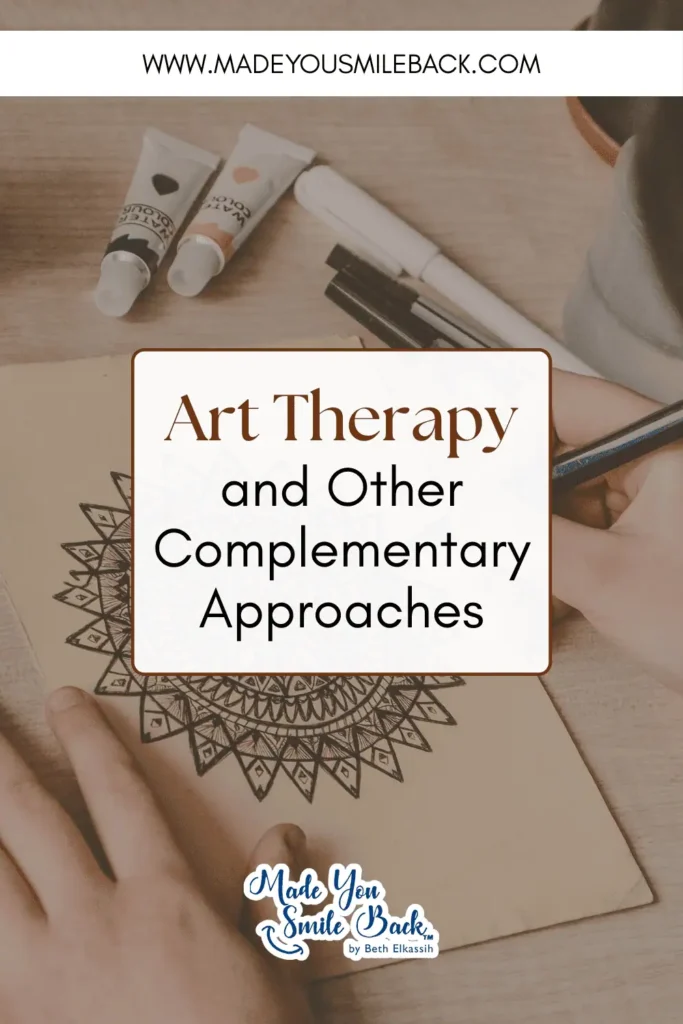
Coloring books serve as one entry point into creative healing, but they differ from formal art therapy in training and scope. Professional art therapy addresses deeper mental health concerns like depression and trauma through guided sessions.
Coloring can work alongside other daily coping strategies to manage anxiety symptoms.
Art Therapy Fundamentals
Art therapy is a distinct mental health treatment that uses creative expression to help you work through emotional and psychological challenges. A trained art therapist guides you through specific activities designed to address your unique mental health needs.
This approach treats conditions like depression, trauma, and anxiety disorders. The therapist interprets your artwork and helps you understand patterns in your thoughts and emotions.
Sessions focus on the creative process rather than making perfect art.
Art therapy works as a non-pharmacological treatment option. It activates different parts of your brain than talk therapy alone.
You might draw, paint, sculpt, or use other media based on your therapeutic goals.
Key differences from casual coloring:
- Led by licensed mental health professionals
- Tailored to your specific diagnosis
- Includes interpretation and discussion
- Addresses root causes of mental health issues
Coloring Books Versus Structured Art Therapy
Coloring books provide a simple, accessible way to reduce anxiety symptoms without professional guidance. You can start immediately at home with minimal cost or training.
The structured nature of coloring pages makes the activity less intimidating than creating art from scratch.
Art therapy requires working with a licensed therapist who holds specialized training in both mental health and creative processes. These sessions cost more and need scheduled appointments.
The therapist designs activities that target your specific mental health challenges.
Coloring quiets your amygdala, the brain’s stress center, which creates a sense of calm. Studies show that coloring for just 10 to 20 minutes can lower anxiety levels.
However, it doesn’t replace professional treatment for serious mental health conditions.
Art therapy goes deeper by helping you process trauma and understand emotional patterns. Your therapist guides discussions about your creative work to promote healing.
This approach works especially well for Complex PTSD and depression that requires more than stress relief.
Combining Coloring with Other Coping Strategies
Coloring works best as part of a broader anxiety management plan. You can pair it with mindfulness practices by focusing completely on the colors and movements as you fill in each section.
This combination increases the calming effect.
Effective pairings include:
- Journaling: Write about your feelings before or after coloring
- Deep breathing: Practice controlled breathing while coloring
- Talk therapy: Use coloring between therapy sessions for ongoing support
- Meditation: Color mandalas as a form of active meditation
Cognitive-behavioral therapy and coloring books complement each other well. The coloring helps you practice emotional regulation skills you learn in therapy sessions.
You can use it as a healthy distraction when anxiety symptoms start to build.
Regular coloring alongside professional treatment improves your overall results. It gives you a portable tool to manage anxiety in daily life.
Many mental health professionals recommend adding coloring to your existing treatment plan rather than using it as your only intervention.
In Conclusion – Final Last Words
Coloring books offer a practical tool for managing anxiety.
The activity engages both sides of your brain and helps calm your nervous system through focused attention on a simple task.
Key benefits you can expect:
- Quiets the amygdala, your brain’s stress center
- Reduces symptoms of anxiety and general stress
- Provides an accessible mindfulness practice
- Creates a sense of psychological calm
You don’t need artistic skill or expensive supplies to start.
Adult coloring books give your mind something to focus on while allowing your body to relax.
The repetitive motions and color choices create a meditative state similar to other mindfulness practices.
Research shows that coloring mandalas and other patterns can decrease anxiety levels in measurable ways.
Your brain responds to the structured activity by lowering stress signals and promoting relaxation.
What makes coloring effective:
- Activates focus without overwhelming your mind
- Offers control in a low-stakes creative outlet
- Provides a break from anxious thoughts
- Works as a form of art therapy you can do anywhere
You can use coloring books as one part of your anxiety management approach.
They work well alongside other strategies like therapy, exercise, or meditation.
The simplicity of coloring makes it easy to practice regularly.
This helps build consistent stress-relief habits into your daily routine.